Launch a Calendar Fragmentation Initiative to reduce employee time loss by 49%
Activate a Calendar Fragmentation Initiative to recover 3–5 hours per employee per week by using AI to consolidate scattered time into uninterrupted blocks.
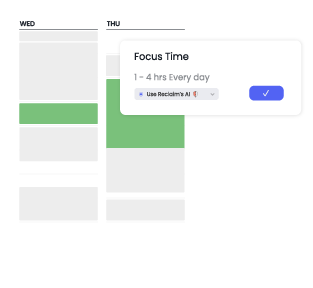
Each employee gets their own AI Assistant that understands their priorities and work rhythms — continuously reorganizing their calendar to reduce time loss.
"Reclaim gives my team the ability to structure their day in an automated fashion. Now, they can put tasks into Reclaim and it handles the scheduling, taking care of deadlines and remaining work hours. It takes the work out of organizing the day, which helps those brilliant minds to focus on the right task at the right time."
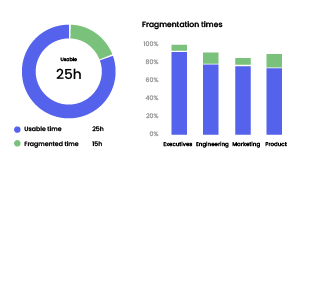
Fragmented time is unusable calendar time created when meetings are spread throughout the day—short gaps, back-to-backs, and broken work blocks that are too small to support meaningful work.
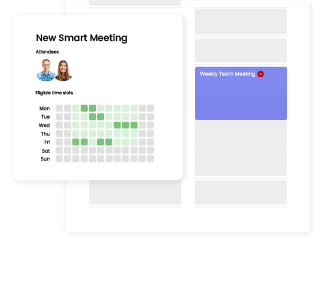
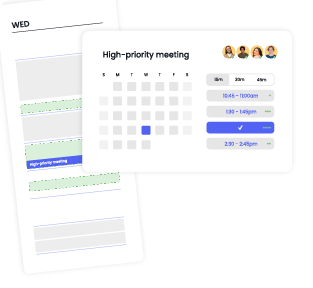
Reclaim identifies these patterns directly from calendar structure and then uses AI scheduling to reduce them. As meetings are added or moved, Reclaim defends longer work blocks, reschedules flexible time, and applies priority rules so important work stays intact instead of being split apart. This makes fragmentation a managed scheduling outcome, not an invisible side effect of a busy calendar.
When fragmentation is reduced, calendars shift from scattered gaps to longer, usable blocks of focus time. Meetings are placed more intentionally, flexible work is rescheduled instead of being broken apart, and longer uninterrupted blocks are preserved as schedules evolve. The result isn’t fewer meetings by default—it’s fewer broken days where work can’t realistically happen.
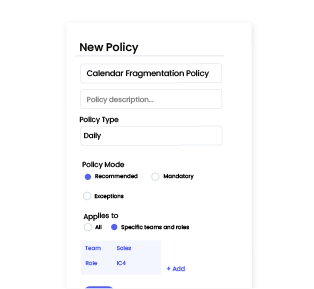
Your Calendar Fragmentation Initiative is applied using Reclaim’s organizational scheduling controls and directory-based scoping. Policies can be analyzed and evaluated across teams, roles, or departments using SCIM-based attributes. This allows different parts of the organization to surface fragmentation patterns, compare usable time, and apply consistent scheduling behavior without managing individual calendars.
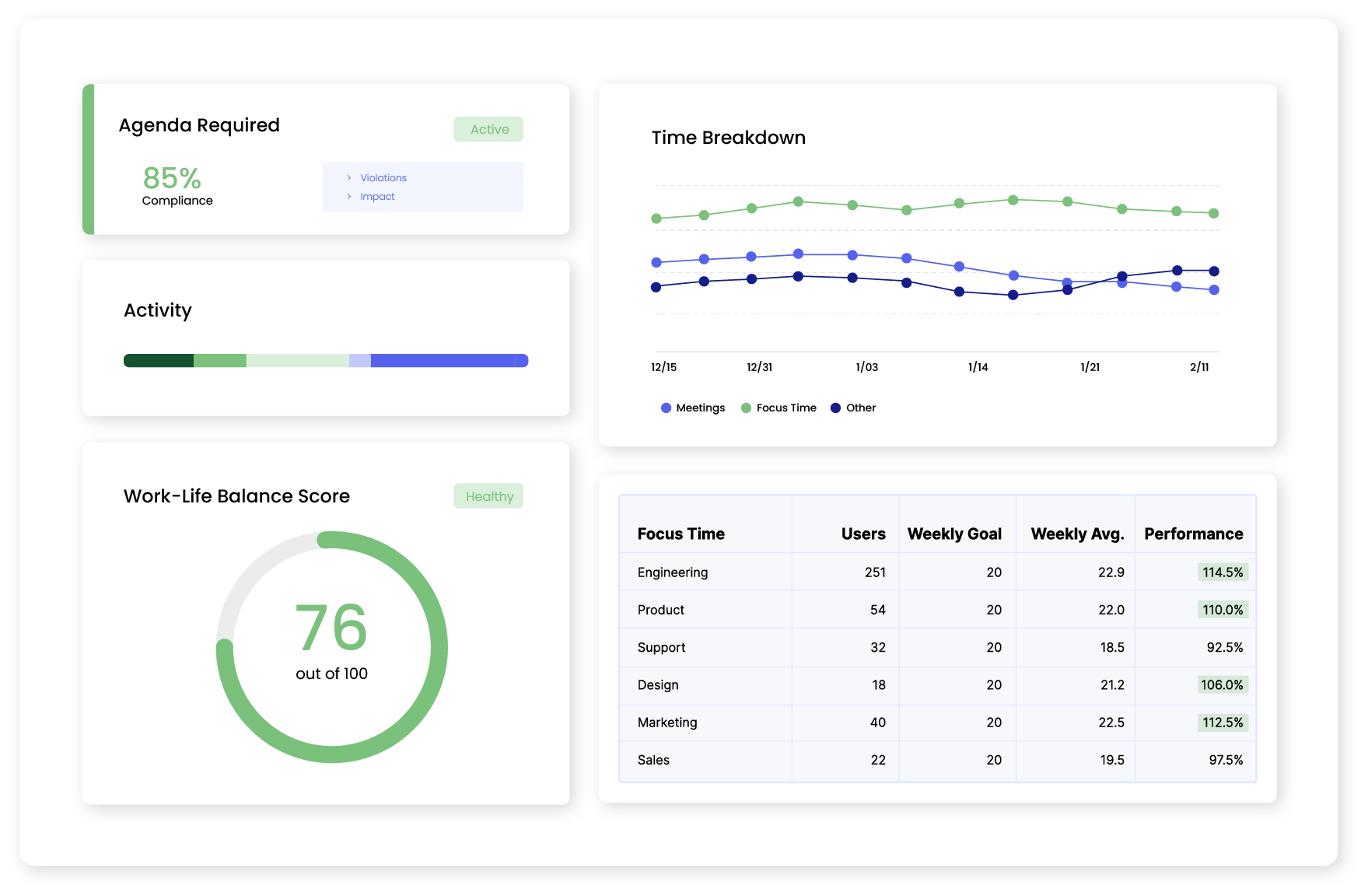
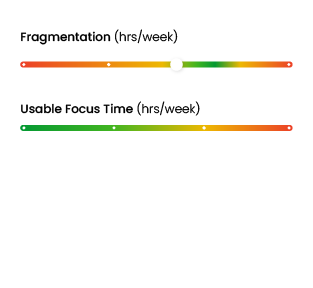
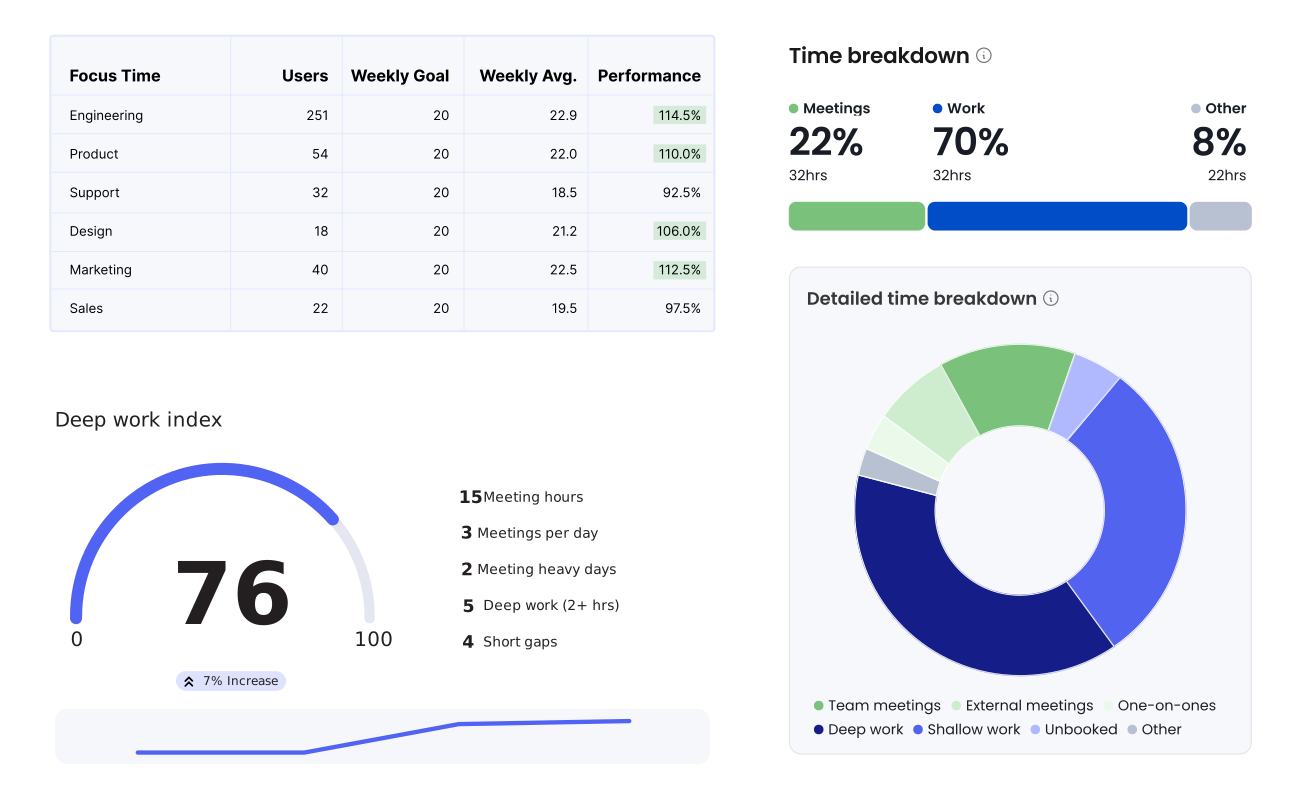
Reclaim’s Workforce Analytics platform makes time fragmentation measurable and visible over time. We work with you to define the right indicators — including calendar fragmentation levels, average uninterrupted work block length, meeting density, and usable vs. fragmented time across teams.
These metrics show whether longer work blocks are holding, whether calendars are becoming more usable, and how execution capacity is trending week over week.
This gives leadership clear, objective visibility into whether the initiative is improving real, usable capacity — not just reducing meeting hours.
Yes. Fragmentation is often most severe in meeting-heavy environments. Reclaim helps organizations distinguish between meeting volume and meeting placement. By measuring fragmentation and applying scheduling automation, teams can reduce unusable time even when meeting counts remain high—improving execution without requiring a cultural reset or meeting elimination mandate.
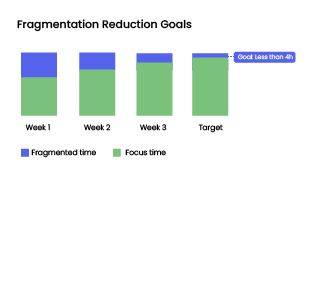
Yes. We work closely with your team to define clear fragmentation reduction goals, set realistic usable work block standards, and establish baseline metrics before activating any scheduling changes.
Rollout can begin at the org, department, or team level—without forcing employees to overhaul their calendars overnight. Existing meetings remain intact, and AI-powered scheduling is introduced gradually, flexing around real priorities instead of resetting schedules.
This ensures adoption feels intentional, flexible, and aligned with your broader capacity and execution goals—not disruptive.
Yes. Many organizations begin with a pilot group of 20–100 employees to measure fragmentation patterns, test usable work block targets, and evaluate impact before expanding company-wide.
We partner with you to design the pilot, analyze the results, and plan a structured organization-wide rollout based on real data—not assumptions.
Book a demo to explore pilot options for your company.
Ready to explore your own Calendar Fragmentation Initiative?