


It’s 11:12 am, and you’ve already “done a lot.” You answered a handful of Slack messages, cleared a few emails, joined a meeting that ran over, then spent ten minutes hunting down the latest doc so you could make a quick edit before the next call. You’ve been all over the place, but the real work really hasn’t started.
When you think about time waste at work, you’re probably imagining people killing time on social media, a long lunch break, or extended watercooler talks. But a majority of time waste actually comes from the unproductive work culture around you.
The average employee is interrupted every 2 minutes by meetings, emails, and chats – that’s 275 interruptions a day. And all of the unnecessary tasks you’re sidetracked with are pulling time away from your core work – constantly leaving both you and your team behind on goals. Let’s see how you can get your time waste under control.
What is time waste?
Time waste is spending time on activities that don’t meaningfully move a priority forward toward outcomes, goals, or value. And the challenge is that not all work is created equal. Some tasks compound progress, unlock decisions, and drive real impact, while others quietly drain hours through inefficient meetings, constant interruptions, redundant work, or unclear priorities.
Over time, these inefficiencies add up, pulling attention away from the focused, high-value work that actually keeps the business moving forward. The result isn’t a lack of effort — teams are busier than ever — but a growing gap between how time is spent and where progress is made.
The cost of time waste at work goes far beyond lost hours – it’s lost company time. It shows up in slower decision-making, missed opportunities, delayed execution, and burned-out employees who spend more time coordinating work than doing it. When high-value contributors are pulled into low-impact tasks, the organization pays twice: once in salary and again in lost momentum. At scale, wasted company time quietly erodes productivity, innovation, and ultimately revenue — making it one of the most expensive and least visible problems businesses face.
Two forms of time waste
Friction multiplies quickly when work isn’t running smoothly. A missing decision triggers messages, messages trigger meetings, and the original work gets pushed into smaller and smaller gaps.
10 most common time wasters at work
Time waste stems from common patterns like excessive coordination, slow decisions, constant interruptions (messages), and small process hiccups, all of which compound quickly. Spot the pattern, and a couple of simple rules are often all it takes to break the cycle.
1. Unnecessary meetings
Not all meetings are bad meetings – but bad meetings are one of the top causes of time waste at work. Employees attend 29.6% more meetings than they should, pulling them away from productive heads-down work that drives the business forward.
When are meetings a complete waste of time?
- No agenda, no decision making
- Information sharing that could be async
- Too many attendees, unclear roles
- Status updates with no blockers
- Recurring meetings without a purpose check
- Meetings to align on work already decided
- Open-ended discussions with no owner
- Meetings scheduled by default, not need
- Follow-up meetings to fix the last meeting
- Calendar placeholders with no outcome
These meetings consume company time without creating clarity, decisions, or momentum. Instead of moving work forward, they pull people out of focused work and replace execution with coordination – quietly crowding calendars and slowing real progress.
2. Calendar fragmentation
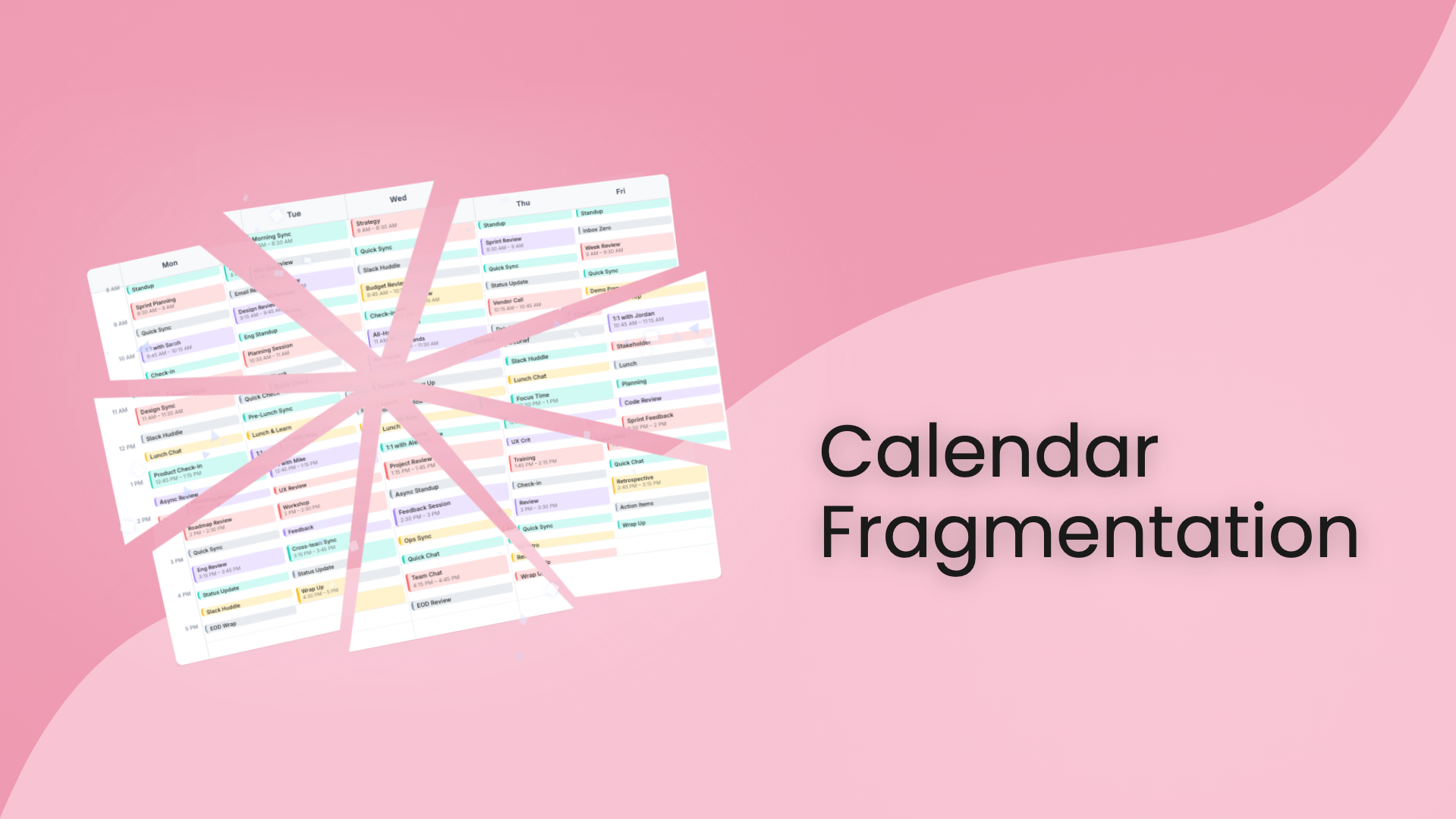
Calendar fragmentation is the most overlooked cause of time waste at work. Even when employees technically have “free time” on their calendars, it’s often broken into short, unusable gaps between meetings that prevent real progress.
- 30-minute gaps scattered between meetings
- Context switching instead of sustained focus
- Idle time spent checking Slack, email, or task lists
- Projects deferred because there’s not enough uninterrupted time to start
In theory, a 30-minute window looks productive. But it rarely is enough time to meaningfully advance a complex project, so it gets filled with low-impact activity to kill time before the next meeting.
The cost compounds quickly. An engineer earning $150,000 per year who experiences an average of 7 fragmented 30-minute gaps per week loses roughly 3.5 hours of productive time weekly – more than $13,000 per year in salary alone. Multiply that across teams or an entire company, and poor calendar design quietly costs businesses millions each year.
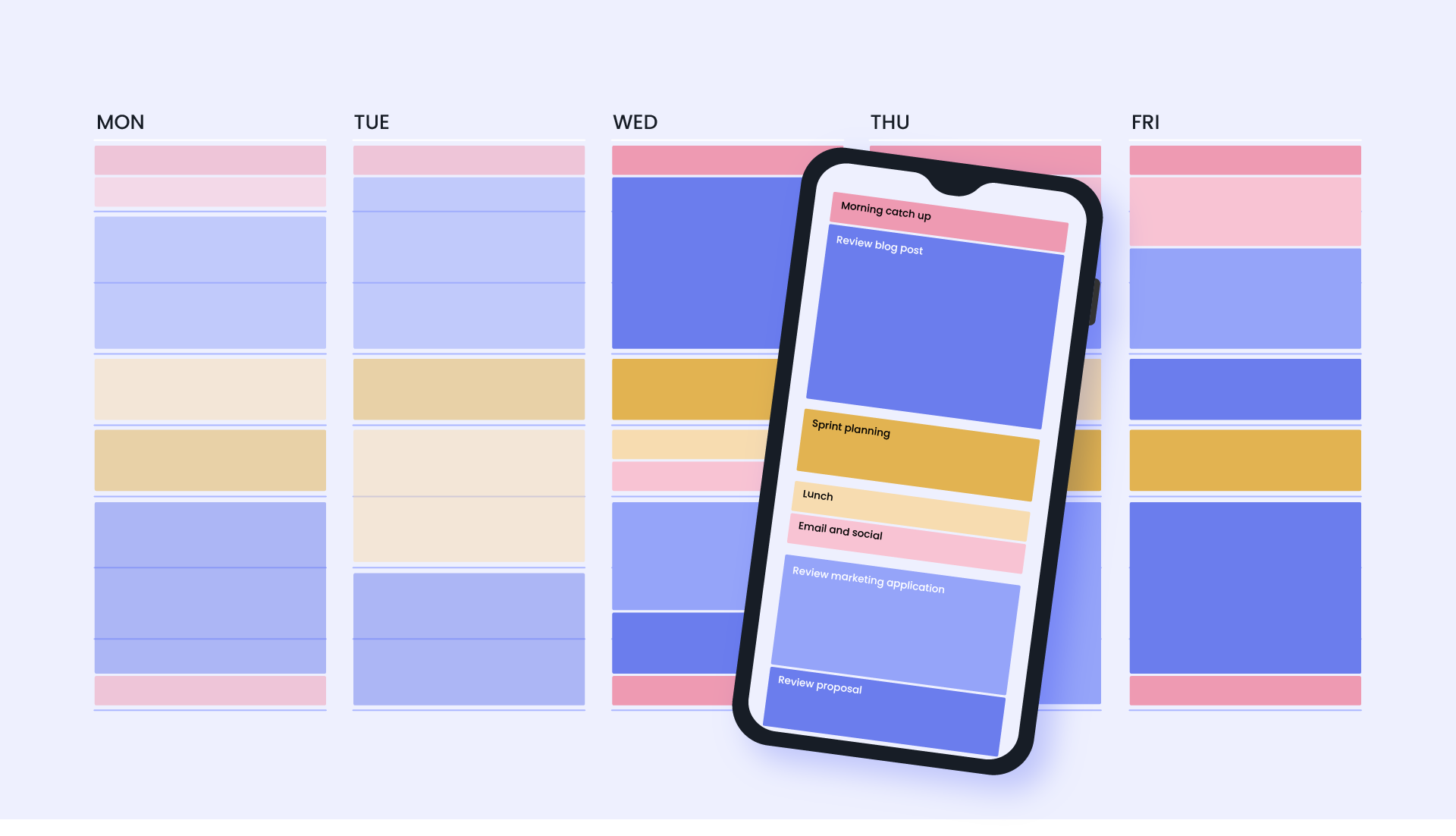
That’s why more teams are turning to AI-powered calendars like Reclaim to automatically protect focus time while optimizing meeting times to avoid these fragmented gaps — so the company can get ahead of this time loss and employees have more space for deep work.
3. Interruptions
Constant pings are a major source of time waste because they don’t feel expensive in isolation. A quick reply here, a notification there – and suddenly the day disappears into reactive work. 59.9% of employees are burned out from too many notifications and distractions, yet most teams still treat instant response as the default. You’ll notice it when:
- Tasks keep getting restarted
- Inbox and chat stay open “just in case”
- Every message feels urgent, even when it isn’t
- Focus time erodes into short, shallow work blocks
Interruptions are especially costly when they escalate to phone calls or meetings, pulling people fully out of whatever they were trying to complete.
The fix is simple but cultural: batch communication into set windows, define clear response-time norms, and protect shared focus blocks so deep work can actually happen.
4. Multitasking & context switching
Multitasking sounds efficient, but most knowledge work doesn’t really run in parallel – it runs in starts, stops, and restarts. Every switch forces your brain to reload context, increasing errors and slowing progress, resulting in:
- Work gets started quickly but finished late
- The day turns into half-progress across many tasks
- Momentum never builds because focus doesn’t stay intact
This happens when priorities shift mid-day, communication stays open at all times, and work lives across too many tools – and context switching becomes the default. Even small switch costs add up when they happen dozens of times a day. After all, it takes over 20 minutes to get back on track after being interrupted from a task. To reduce it, make “one thing at a time” easier: protect time for a single primary task, limit active work in flight, and keep a daily focus block intact.
5. Information scavenger hunts
Information scavenger hunts waste time because the work itself isn’t hard – the setup is. You sit down to do something simple, then spend time hunting for the latest doc, the right link, the final decision, or the person who owns the answer.
This is common at scale: 62% of employees spend too much time searching for information, and 47% of digital workers struggle to find what they need to do their jobs.
It happens when naming is inconsistent, ownership is unclear, storage is scattered, and tool sprawl makes everything harder to locate. The fix: create a single “front door” for each project, document ownership and last-updated dates, and use a unified search layer like Dropbox Dash to surface the right context across tools instead of bouncing between tabs and chat threads.
6. Unclear priorities
Unclear priorities turn every task into a tradeoff. People chase what feels most urgent, while the work that matters gets squeezed into whatever time is left. The result is busy days with little progress to show for them, and often looks like:
- Plans shifting midstream
- Tasks starting and stopping
- Projects stalling because alignment keeps changing
This usually comes from competing goals, new requests added without anything coming off the plate, too many intake channels, and fuzzy ownership. To tighten it up, define the one ultimate goal that would make today a win. Before accepting new work, ask: What does this support—and what does it replace? Keep a short, prioritized to-do list and treat everything else as a parking lot until it earns a slot.
7. Rework
Rework is one of the most expensive forms of time waste because you end up doing the same work twice – once to create it, and again to revise and realign.
Most rework starts upstream: unclear requests, missing success criteria, misaligned stakeholders, and late feedback all increase the odds that work will need to be redone. To reduce it, use a one-page brief (goal, audience, definition of done, constraints), recap kickoffs in writing, and ask for structured feedback that clearly calls out what’s working, what needs to change, what decision is required.
8. Bottlenecks
Slow approvals and dependency bottlenecks waste time by putting work into limbo. Tasks looks “in flight,” but nothing moves while everyone waits for a review, approval, answer, or unblock. This often looks like:
- Work stuck in “pending review”
- Projects dependent on one overloaded approver
- Approvals that arrive in batches, too late to be useful
This usually stems from vague decision ownership and overloaded approval systems. The fix is to assign one clear decision owner per step, make approvals easy by surfacing the recommendation upfront, and reduce approver count wherever possible. Over time, pre-approve guardrails for routine work and use a single unblock channel with clear rules.
9. Micromanagement
Micromanagement and heavy status reporting waste time by turning progress into performance. Instead of doing the work, people spend time proving they’re busy through endless check-ins, long updates, and unnecessary oversight.
This often comes from uncertainty – leaders want predictability, teams want to avoid surprises, and reporting fills the gap when trust and clarity are low. The fix is to report outcomes, not activity: what’s done, what’s blocked, what decision is needed. Make async updates the default, reserve live meetings for risks and decisions, and use shared artifacts so progress stays visible without constant interruption.
10. Distracting work environments
Distracting work environments make it difficult to sustain focus, turning deep work into short, broken fragments. You’ll notice it when simple tasks take longer than expected and important work keeps getting deferred. This often looks like:
- Frequent interruptions and drop-ins
- Short, unusable work blocks
- “I’ll do this later” procrastination
Quick fixes include making focus visible through norms or signals, blocking deep-work time on calendars, and moving focus work to quieter zones when needed. Longer-term, teams should design spaces and norms that match different types of work instead of treating all work as interruptible.
11. Procrastination & avoidance
Procrastination often looks like a bad personal habit, but it’s usually a response to work that feels unclear, overwhelming, or poorly scoped. That’s how it becomes a source of time waste.
You’ll see it when people kill time with low-stakes tasks – organizing, polishing, clearing emails – while the real work gets pushed to “later.” Fragmented days make it worse, because starting something demanding in your spare time between meetings feels pointless when there aren’t enough minutes available to even make a dent.
To break the loop, shrink the starting line. Define a five-minute next action, adopt a “messy first draft” rule, and block 20–30 minutes with one goal: begin.
Stop time waste by fixing the system (not the person)
Time waste at work usually comes from predictable sources: meetings that don’t produce decisions, constant pings that fracture attention, context switching, unclear priorities, rework, slow approvals, and the daily scavenger hunt for the right information.
The fastest way to reduce time waste is to pick two causes and fix them with simple rules. A meeting outcome requirement can cut calendar sprawl quickly. Response-time norms and focus hours can restore long work blocks. A single source of truth can eliminate repeated questions and duplicate effort. Small changes compound because they remove friction that shows up everywhere.
When you stop leaking minutes into gaps and friction, you regain time that can go toward real progress with new skills that compound over time.
When focus returns, it creates space for higher-leverage work and career development that keeps getting postponed.
Productivity Trends Reports