









AI assistants' maturity is accelerating at an unbelievable rate, with new capabilities hitting the market every day (if not hour). They can now:
- Run your calendar end-to-end
- Own your inbox
- Draft, refine, & rewrite
- Research the web & bring receipts
- Drive multi-step work across your tools
- Turn meetings into momentum
- Act as an analyst
An AI assistant app uses artificial intelligence, natural language processing, and/or machine learning to understand intent, take action, and complete tasks. That can mean answering a question, booking time on a calendar, prepping a reply, moving data between apps, or kicking off an intelligent workflow. Some lean into open-ended conversation and research. Others specialize in scheduling, email, or automation. This guide looks at both general assistants and focused workday tools so you can choose the right fit to help enhance productivity.
We compared hundreds of AI assistants to come up with the top 20 to try in 2026. For each pick, you’ll see what stood out, trade-offs to keep in mind, verified pricing and platforms, and who it’s best for.
Our review lens
- 🧠 Conversation & reasoning: Factual accuracy, reasoning depth, and real-world problem-solving, checked independently.
- 📅 Planning & scheduling: Calendars, tasks, and habits, with conflict handling and smart rescheduling.
- 📧 Email assistance: Reply drafting, thread summaries, and action-item extraction.
- ⚙️ Automation & actions: Native actions, cross-app data movement, and end-to-end workflows.
- 🎙️ Voice & on-device help: Hands-free commands, app control, and screen or camera context.
- 🧩 Use-case performance: Handling of common, specific, and complex tasks against clear success criteria.
- 📚 Faithfulness & citations: Accuracy safeguards, citation options, and grounded generation.
- ⚡ Reliability & speed: Consistency, error handling, and time to a useful result.
- 🔗 Integrations & ecosystem: Depth across calendar, email, files, and messaging, plus add-ons and APIs.
- 🔒 Privacy & data controls: Retention, encryption, on-device options, and admin controls.
- ✨ Ease of use: Setup, onboarding, and cross-platform availability.
- 💰 Value: Free plan, plan limits, and capability for the price.
The top 20 AI virtual assistant apps
Below are our picks for the best AI personal assistants for 2026:
| Tool | Best for | Free tier | Starts at | What it can doiThe main action each tool can take for you. Hover a cell for detail. | |
|---|---|---|---|---|---|
| Overall conversational assistant | Yes | $20/mo | Browses the web & runs tasksIn Agent mode it browses sites and fills forms, and through connectors it works in Gmail, Calendar, and Slack, pausing for approval on anything sensitive. | ||
| Google ecosystem assistant | Yes | ~$20/mo | Acts across Google WorkspaceActs inside Gmail, Docs, and Workspace, with agentic web tasks handled by Gemini Agent and Chrome's auto-browse. | ||
| Calendars & scheduling | Yes | $10/mo | Schedules & defends your calendarAutomatically books, defends, and reschedules events across Google Calendar and Outlook Calendar, and works from ChatGPT, Claude, and more. | ||
| Research depth & writing quality | Yes | $20/mo | Controls your browser & desktopCowork runs multi-step tasks across your desktop and files, and Claude in Chrome acts on the web; MCP connects your other tools. | ||
| Web answers with citations | Yes | $20/mo | Completes web tasks in CometIts Comet browser navigates sites to fill forms, book reservations, and compare options across open tabs, asking you to confirm before payments or submissions. | ||
| Microsoft 365 work | Yes | $20/mo | Acts across Microsoft 365Drafts in Word, builds formulas in Excel, triages Outlook, and recaps Teams calls; custom Copilot agents extend it, but reach is limited outside Microsoft 365. | ||
| Autonomous AI agents | Trial only | $49.99/mo | Runs autonomous workflowsActs like an executive assistant: triages your inbox, drafts replies in your voice, books and reschedules meetings, and updates your CRM, even by text. | ||
| General autonomous agent | Yes (credits) | $20/mo | Runs tasks end to endTakes a goal and works through it on its own, returning finished deliverables like research reports, spreadsheets, slide decks, or simple websites. | ||
| Fast, focused email | Trial only | $30/mo | Triages & sends emailAuto-labels your inbox and drafts replies in your voice, schedules meetings from a thread, and can be driven from ChatGPT or Claude to search and send. | ||
| Gmail-centric email assistant | Trial only | $24/mo | Triages & sends emailGroups and summarizes your inbox, drafts and sends replies, and books meetings, all grounded in your Gmail history. | ||
| Bot-free meeting notes | Yes | $14/mo | Captures & summarizes meetingsRecords meeting audio on your device without sending a bot into the call, then writes a structured recap with action items to share; actions stay limited to notes. | ||
| Browser-native automations | Yes | $10/mo | Automates browser workflowsRuns no-code "playbooks" that scrape pages, move data between web apps, and repeat multi-step tasks on a schedule or trigger. | ||
| No-code cross-app workflows | Yes | $19.99/mo | Automates across 9,000+ appsTriggers multi-step "Zaps" across more than 9,000 apps, with AI steps for drafting and decisions, and connects to ChatGPT or Claude over MCP. | ||
| AI helpers for small teams | Trial only | $39/mo | Completes marketing & ops tasksPre-built AI "helpers" draft content, handle email and social posts, and answer common support questions for small teams. | ||
| Built-in assistant for Apple devices | Free | Included | Runs on-device app actionsSets reminders, sends messages, and controls apps through App Intents; the new Siri AI expands these systemwide actions across your Apple devices. | ||
| Workspace assistant for small businesses | Trial only | $20/mo | Creates pages & runs agentsCreates and edits pages and databases; Notion Agents can also draft email, manage your calendar, and post to Slack via connectors. | ||
| Meeting note assistant | Yes | $16.99/mo | Records & summarizes meetingsJoins calls to transcribe live, then shares a summary with highlights and action items; actions stay limited to notes. | ||
| AI presentations & on-brand content | Yes | $10/mo | Generates decks & documentsTurns a prompt or outline into finished decks, docs, and websites you can edit and share; it doesn't act across your other apps. | ||
| Assistant inside team chat | No | $8.75/mo | Summarizes & answers in SlackCatches you up with channel and thread recaps, answers questions from your message history, and summarizes huddles, all inside Slack. | ||
| Data & email extraction | Yes | $83/mo | Extracts & exports web dataA no-code scraper that collects data from websites on a schedule and exports it to Excel, CSV, or an API. |
1. ChatGPT – best overall conversational assistant
Best for: Everyday Q&A, brainstorming, drafting, data cleanup, & custom workflows for complex tasks.
Why we picked it: In everyday use, ChatGPT gets from a short prompt to a usable draft quickly and keeps your instructions/tone consistent across follow-ups, no elaborate prompt engineering needed. Saving good prompts as mini-assistants helps with repeat jobs (e.g., routine summaries, email replies) so you’re not starting from scratch. It’s easy to reach on web, phone, and desktop, which cuts friction. We’d still verify dates and numbers, and hands-on actions (like scheduling) often need a dedicated tool. But, as a default starting point for conversation, drafting, and light analysis, ChatGPT performs well on speed-to-useful and ease of use.
Key features
- Multimodal chat in one thread (text + images + real-time voice), powered by GPT-5.5 (with GPT-5.5 Pro on higher tiers).
- Custom GPTs & GPT Store to turn repeat tasks into one-click mini-assistants.
- Upload PDFs/Docs/CSVs and get structured summaries, charts, and transformations.
- Image generation directly in ChatGPT (DALL·E/ChatGPT Images).
- Custom GPTs can call external APIs (“GPT Actions”) to fetch data or take action.
- Voice mode for natural, responsive conversations on mobile/desktop.
Limitations to keep in mind
- Can still hallucinate or oversimplify; double-check important claims.
- Model/tool access and message limits vary by Plus/Pro/Business/Enterprise; admins can restrict options.
- Long chats and large uploads hit hard limits (e.g., 196K tokens for Thinking; 512 MB/file).
- Consumers can opt out of training; Business/Enterprise/Edu data isn’t used for training; Temporary Chats are deleted after ~30 days.
- Web lookups can be blocked; policies enforce guardrails and may limit activity.
ChatGPT pricing: Free → paid plans start at $20/month.
2. Gemini – best Google ecosystem assistant
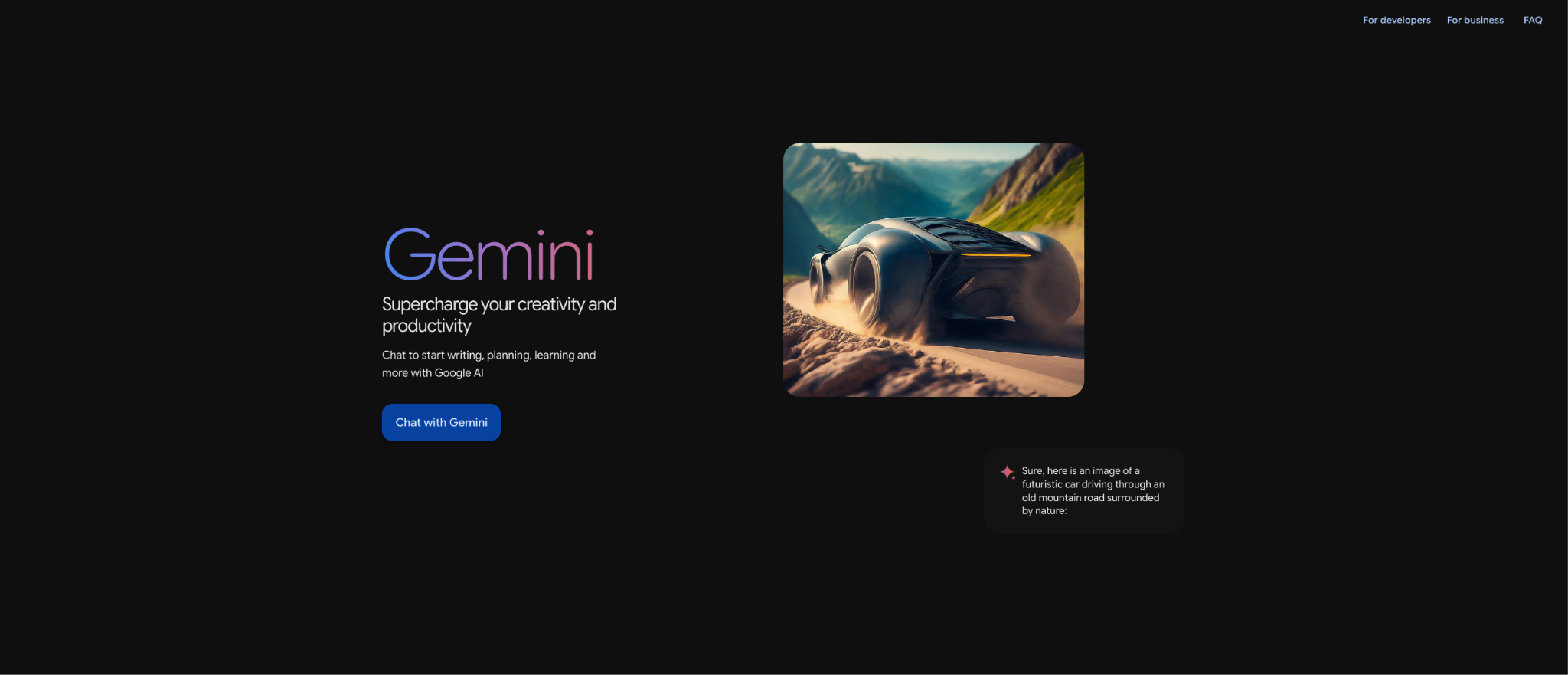
Best for: Voice-first tasks, quick actions across Google apps, smart devices, navigation, and hands-free help on Android.
Why we picked it: Gemini cuts down on app-hopping if you live in Google’s world. Drafts and summaries show up right inside Gmail/Docs/Sheets/Slides/Meet, and Extensions let it pull context or take quick actions from Google Maps, Drive, YouTube, and more. When speaking is easier, Gemini Live handles real-time voice with screen/camera context, which speeds up simple tasks.
Key features
- Built on Gemini 3.1 Pro and woven across Google apps (Gmail/Docs/Sheets/Slides/Meet); the Gemini app has replaced Google Assistant on Android.
- Extensions to Google services (Maps, YouTube, Flights/Hotels, Drive, Gmail, and more).
- Gemini Live (multimodal voice) with camera/screen sharing for show-and-tell help.
- On-device AI (Gemini Nano) for private, low-latency tasks on supported devices.
- File uploads (docs, images, audio) for grounded summaries and Q&A.
- “Gems” customization to create personal mini-assistants.
- Home & devices: rolling out on Nest speakers/displays; support across wearables, auto, and other smart home devices.
Limitations to note
- Advanced features & higher limits (Deep Research, video, 1M context) require AI Pro/Ultra and still observe daily caps.
- Context/file limits and API rate limits apply; long chats/uploads can hit ceilings.
- Data & privacy: consumer chats may be reviewed/used to improve services unless activity is off; Workspace data isn’t used to train and isn’t human-reviewed.
- Safety filters can block outputs; always double-check critical facts.
Gemini pricing: Free → paid plans start at $19.99/month.
3. Reclaim.ai – best for calendars & scheduling
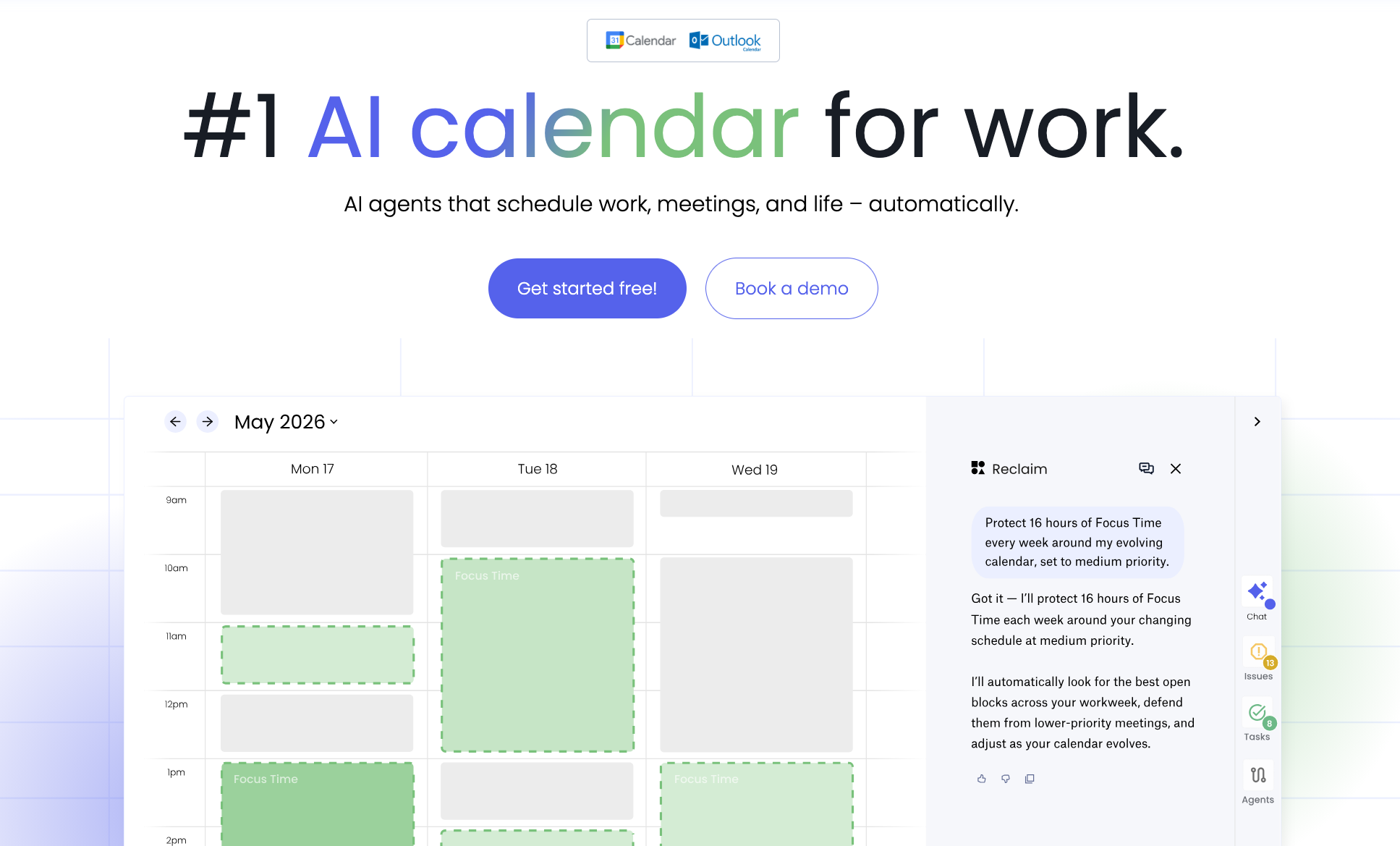
Best for: Protecting your time, optimizing your meetings, preventing interruptions, and analyzing your productivity.
Why we picked it: Reclaim.ai is an AI calendar app that defends your time instead of just suggesting it. With Reclaim 2.0, you activate AI agents around your goals and they manage your time for you 24/7. In doing so, it protects your time so you aren't the one rearranging your calendar. Its AI agents hold space for deep work and shuffle those blocks automatically when a meeting lands on top of them, and they keep routines like lunch or a midday workout from getting squeezed. Anything it schedules shows up as a normal event in the Google or Outlook calendar you already use, so you stay in control and can move or delete it.
The 2.0 release adds an agentic chat layer on top of all of that. Cancel Friday’s customer meeting, turn on a daily lunch habit, move your three Wednesday 1:1s by 30 minutes, or rebuild your whole week from a single prompt, then ask “where did my week go?” and get an answer pulled from your actual time data. The defining feature is preview mode: every action lands in a sandbox first, so a human approves what actually goes live, a verification step most agent platforms still don’t ship. Native MCP support extends it further, making Reclaim’s calendar, tasks, and habits available to any MCP-compatible AI tool like Claude, ChatGPT, and Cursor. From individuals boosting their own productivity to enterprise teams, it’s our number-one pick for optimizing your most valuable resource: your time.
Key features
- Agentic chat for natural-language calendar actions: analyze your week, cancel or reschedule, find time, or spin up a custom agent on the fly.
- Preview mode stages every AI action in a sandbox for human approval before it goes live.
- Habits, Focus, and Buffer agents handle routines, deep work, and decompression time after meetings, with conditional rules.
- AI time blocking automatically protects Focus Time, Tasks, and Habits around your existing events, flexibly rescheduling for conflicts and priority changes.
- Smart Meetings automatically schedule time to meet, notify you on conflicts, and auto-resolve issue recommendations.
- Task scheduling from Asana, Jira, Linear, ClickUp, Notion, Google Tasks, and Todoist.
- Calendar Sync mirrors events across work and personal calendars (multi-account Google and Outlook) to prevent double-booking, with detail masking.
- Native MCP support exposes Reclaim’s calendar, tasks, and habits to MCP-compatible AI tools (Claude, ChatGPT, Cursor).
- Time tracking and team analytics for workload visibility, plus Slack, Zoom, Google Meet, and Microsoft Teams integrations.
- Enterprise security: SOC 2 Type II, GDPR, CCPA, and Data Privacy Framework, with SSO and SCIM on Business and Enterprise tiers.
Limitations to note
- Web-first on mobile (mobile app coming soon).
- Lightweight project management features by design..
- No Apple Calendar support.
Reclaim.ai pricing: Free → paid plans start at $10/month.
Disclosure: Reclaim.ai is our product. We've reviewed it based on how we use it internally across our team every day, and we've applied the same critical lens we used for every other tool on this list. No vendor has compensated us or influenced the rankings you see here.
4. Claude – best for research depth & writing quality
Best for: Long-form drafting, careful reasoning, and working with lengthy documents.
Why we picked it: When the job is careful writing or pulling a lot of sources into something clear, Claude just… behaves. It turns messy notes into clean, ready-to-edit drafts with minimal prompt fuss, keeps structure and tone steady over long back-and-forth, and, when you need receipts, can show its sources so reviews go faster. Because it moves smoothly from idea to a shareable working output (not just a chat transcript), the path from prompt to finished doc is shorter. Still sanity-check key facts, but for high-stakes writing, Claude is a safe pair of hands and a dependable personal AI assistant for long-form work.
Key features
- Projects workspaces to keep files, context, and chats together so Claude stays grounded.
- Artifacts for live, editable outputs (docs, code, small apps), with newer updates that let you build apps directly in Claude.
- Web search with citations for up-to-date answers.
- Research mode & Google Workspace integrations to summarize, pull action items, and use org context.
- Large context windows (up to 1M tokens on Sonnet 4.x); Claude Opus 4.8 is the current flagship for coding, agents, and complex work.
- Computer Use (beta) to control a desktop (move cursor, click, type, automate UIs) through the API.
- Claude Code and new admin controls on Team/Enterprise tiers.
- Mobile apps on iOS and Android with photo/file input and synced history.
Limitations to note
- Some advanced capabilities (bigger context windows, Projects, org web search, file creation, memory) depend on plan and admin settings.
- Guardrails apply: refusals happen and, in extreme cases, a chat can be ended.
- Usage caps & API rate limits remain; long chats hit context limits (200K/500K).
- Data policy: consumer chats/code may train models if you opt in (5-year retention); enterprise/API are excluded and retain 30-day logs.
- Text-only outputs; no image generation.
Claude pricing: Free → paid plans start at $20/month.
5. Perplexity – best for web answers with citations
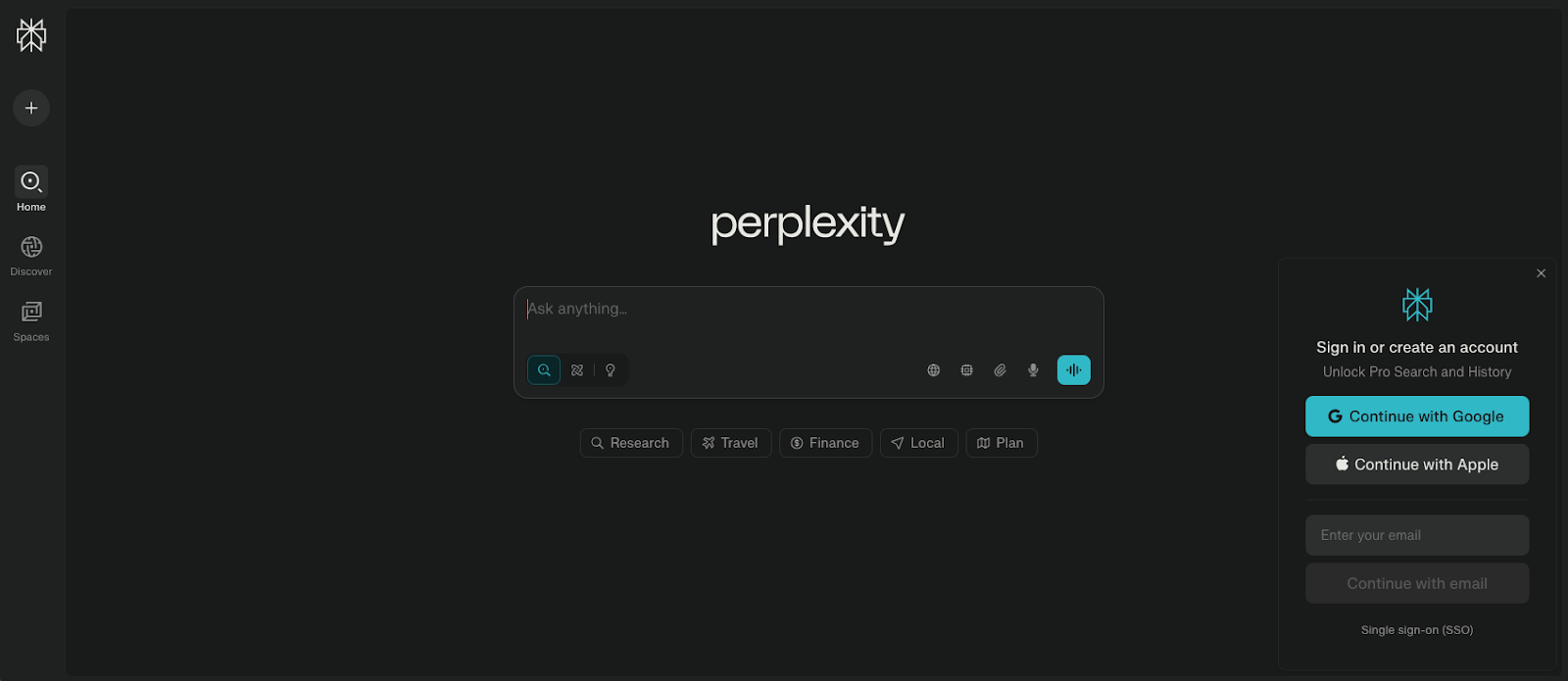
Best for: Fast factual lookups, topical research, and answer sets you can trust and share.
Why we picked it: When being right matters, Perplexity gets you from question to a checkable answer fast. It leads with sources you can click, nudges vague prompts into sharper ones, and scales from quick lookups to tidy briefs, no tab jungle required. Sharing is painless (turn a thread into a page or just pass the link), and it feels the same on web, mobile, and in the browser. If your flow is “find it, cite it, ship it,” this is the one to reach for.
Key features
- Deep Research runs multi-step automated research and compiles a structured brief with citations.
- Answers are cited by default, and Perplexity can ask clarifying questions to refine vague queries.
- Focus/Academic mode targets scholarly sources, and source controls let you choose Web, Org Files, or both.
- You can upload documents, images, audio, and video, and connect file apps to ground answers in your own materials.
- Spaces help organize projects, and Pages turn results into shareable, article-style write-ups.
- A mobile voice assistant on iOS and Android enables hands-free follow-ups and basic actions.
- A Chrome extension brings in-page answers, and the Comet AI browser on Mac/Windows adds assistant actions at the system level.
- Enterprise search blends the open web with company files under admin controls and permissions.
Limitations to note
- Great when sources are solid; still misattributes or hallucinates; always check the links.
- Free has small daily caps; Pro has Labs = ~50/month; Max advertises unlimited Labs; Enterprise adds admin/privacy controls.
- 40 MB/file, 10 at once; Spaces have per-plan quotas; only slices enter the model window.
- Usage-tier rate limits constrain heavy/automated use.
- Enterprise/API not used for training; consumers can opt out.
Perplexity pricing: Free → paid plans start at $20/month.
6. Microsoft Copilot – best for Microsoft 365 work
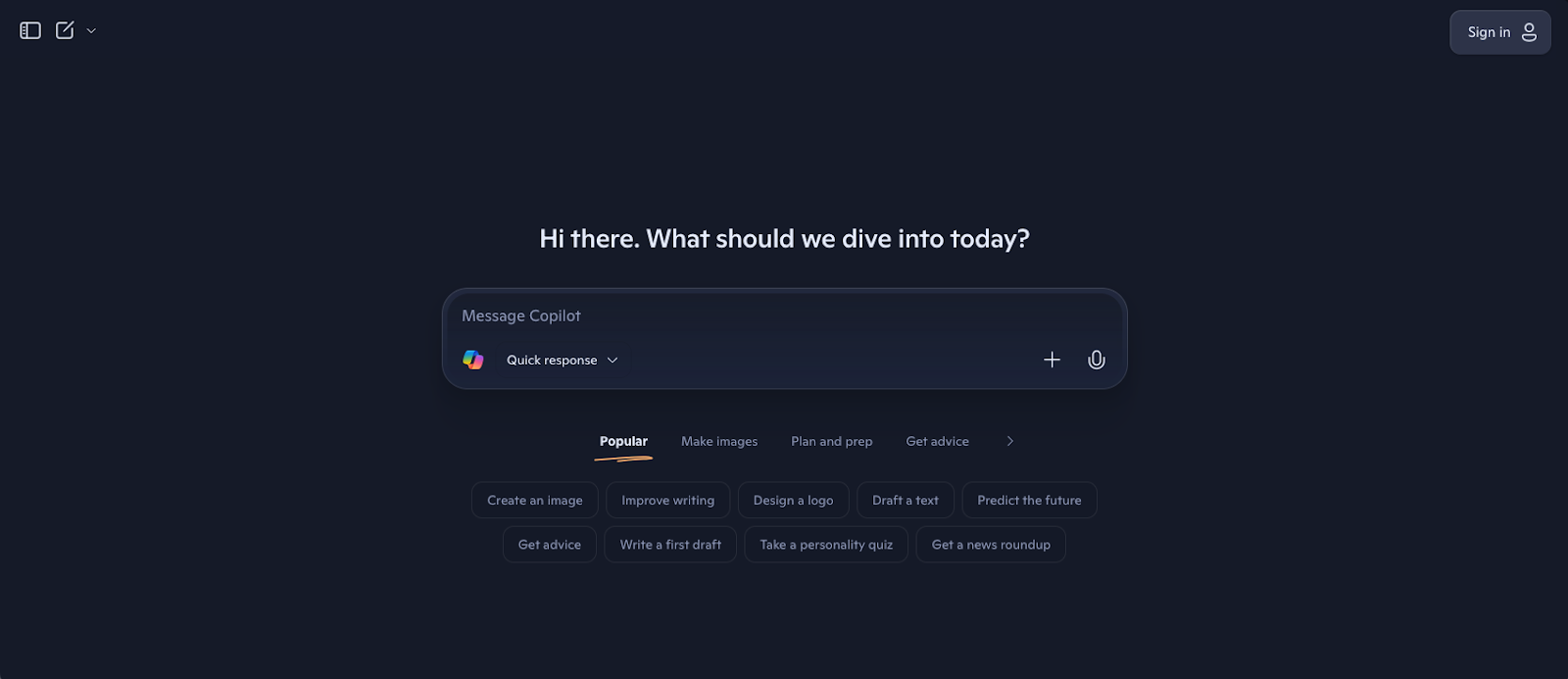
Best for: Drafting, summarizing, analysis, and meeting follow-ups inside Word, Excel, PowerPoint, Outlook, and Teams.
Why we picked it: If you live in Microsoft 365, Copilot is the lightest lift. It’s right inside Word, Excel, PowerPoint, Outlook, and Teams, so prompts turn into drafts, summaries, charts, and follow-ups without context switching. It’s especially good at follow-through – rolling meeting chatter into action items and the next email or deck, all in place. Because it uses your org’s data and permissions, results are relevant and safe to share, and IT gets the governance they expect. For Microsoft-first teams, it’s the straightforward way to give everyone an everyday assistant.
Key features
- Copilot works directly inside Word, Excel, PowerPoint, and Outlook (with OneNote on Pro/consumer), turning prompts into drafts, analyses, slides, and summarized emails.
- Teams support includes Intelligent recap that captures notes, highlights, analyzes data, tasks, and follow-ups from meetings.
- Copilot Chat for work uses your Microsoft Graph data with role-based permissions, and prompts/responses aren’t used to train foundation models.
- Copilot Studio lets you build custom agents with Agent Builder, add knowledge sources, and extend with connectors to Microsoft and third-party apps.
- Enterprise security, privacy, and compliance include options like GDPR/EU Data Boundary, defense-in-depth, and robust admin controls.
Limitations to note
- Capabilities vary by license, region, and admin policy (agents, web grounding, higher caps often need Copilot for M365 + Studio).
- Excel AI is improving, but not for accuracy-critical work yet; check outputs and expect preview rate limits.
- Quotas & ceilings: agent RPM/credits, per-prompt file/context limits, retention rules.
- Enterprise prompts/Graph data aren’t used to train; consumer Copilot has opt-outs and 30-day file retention.
Copilot pricing: Free → paid plans start at $20/month.
7. Lindy – best for autonomous AI agents
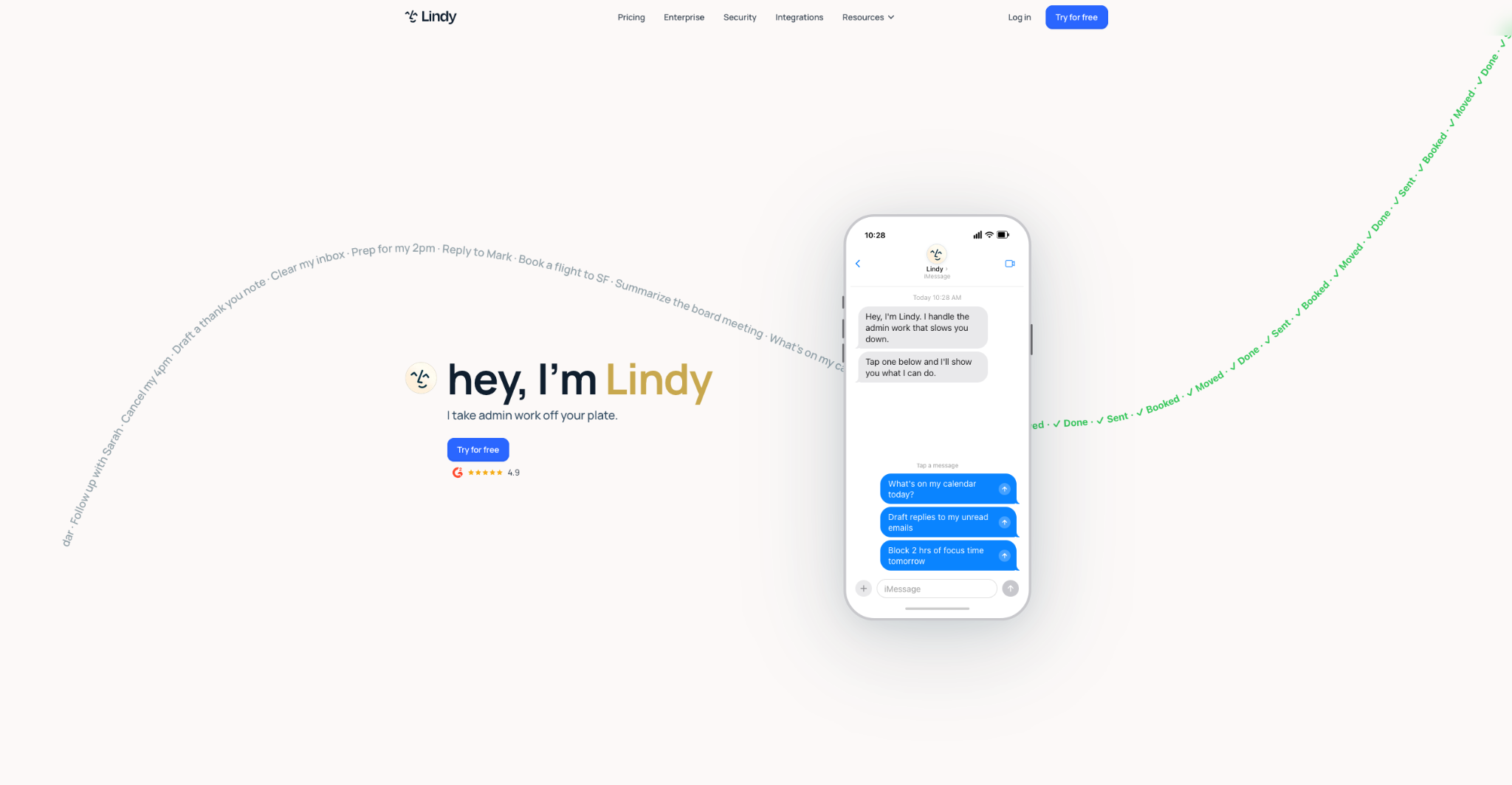
Best for: Solo operators and small teams that want an always-on AI assistant to run email, scheduling, and follow-ups, not just chat about them.
Why we picked it: Lindy leans into the “AI agent that does the work” idea harder than almost anything else on this list. You text it over iMessage or SMS, or work from the web, and it triages your inbox, drafts replies in your voice, books and reschedules meetings, takes meeting notes, and chases follow-ups on its own. You can also build custom agents from plain-language instructions, so repeat work (lead enrichment, CRM updates, weekly recaps) runs without you. It’s firmly in the action-taking camp, which is exactly where 2026 is heading; the trade-offs are price and a learning curve once you move past the templates.
Key features
- Build agents in plain language, then let them run multi-step workflows across your tools.
- Inbox triage, tone-matched reply drafts, and proactive nudges over iMessage/SMS or web.
- Meeting scheduling, rescheduling, recording, and automated notes and follow-ups.
- Connects to email, calendar, CRMs, and a wide library of apps for end-to-end automation.
- Enterprise options with SSO/SCIM, audit logs, and HIPAA support (signed BAA).
Limitations to note
- No permanent free tier; a 7-day trial is the entry point.
- Premium pricing, and credit overages bill at a higher rate, so watch heavy usage.
- The messaging-first interface and agent setup take some getting used to.
- Autonomous actions still warrant review on high-stakes tasks.
Lindy pricing: 7-day free trial → paid plans start at $49.99/month.
8. Manus – best general autonomous agent
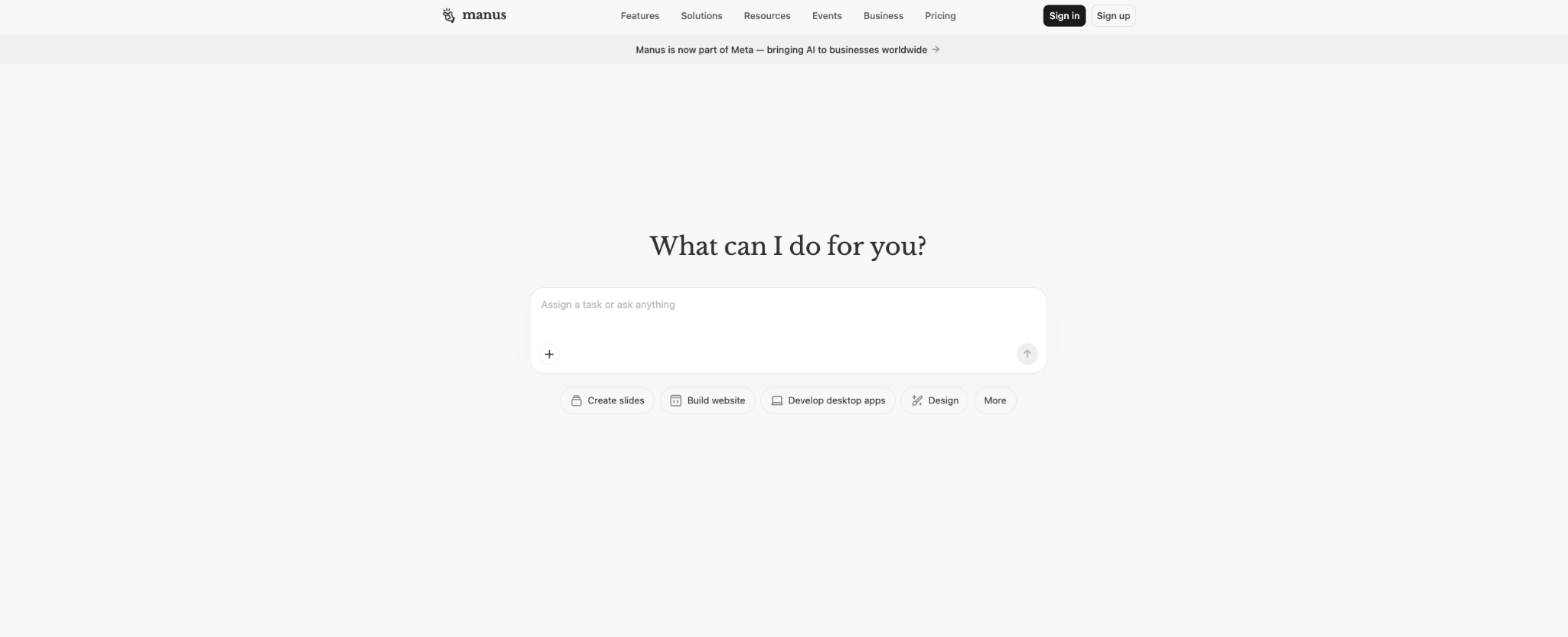
Best for: Hands-off, multi-step tasks where you want an agent to go off and return a finished result (research, spreadsheets, simple sites, outreach).
Why we picked it: Manus is one of the breakout general-purpose AI agents of the past year. Instead of returning a chat reply, it spins up its own virtual workspace, browses the web, runs tools, writes and tests code, and hands back a completed deliverable: a researched report, a populated spreadsheet, a draft site. You describe the outcome; it plans and executes the steps. For “go do this whole thing for me” jobs it’s genuinely impressive, though, like any autonomous agent, longer runs need a quick review before you ship the result.
Key features
- Autonomous, multi-step task execution in a cloud workspace (browse, code, build, compile).
- Produces finished artifacts: reports, spreadsheets, slides, and lightweight web pages.
- Runs tasks asynchronously, so work continues in the background; mobile and web apps.
- Credit-based usage with a free daily allowance, scaling to higher paid tiers.
Limitations to note
- Credit consumption can add up fast on complex, long-running tasks.
- Autonomous output still needs human review for accuracy and judgment.
- Less suited to quick back-and-forth chat than ChatGPT or Claude.
- Newer platform; integrations and reliability are still maturing.
Manus pricing: Free (daily credits) → paid plans start at $20/month.
9. Superhuman – best for fast, focused email
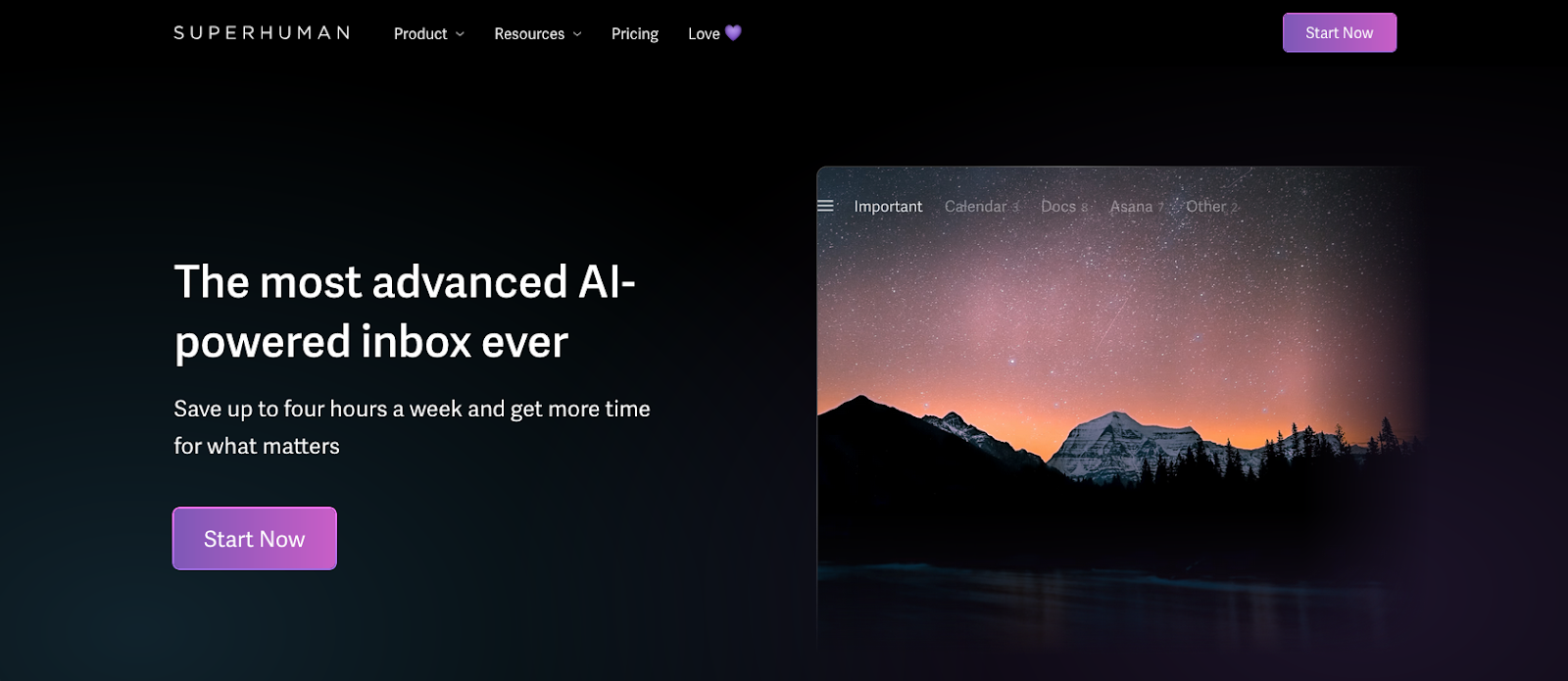
Best for: Flying through inbox triage, drafting replies, and staying on top of important threads.
Why we picked it: If a big slice of your day is email, Superhuman helps you clear the deck with less friction. The keyboard-first flow plus AI summaries and tone-aware drafts reduce the time you spend on long threads, while low-value messages get filed out of the way. Scheduling and follow-ups happen inside the inbox, so you keep momentum, and teams can keep responses consistent with shared snippets. Still, it’s a premium tool and mainly makes sense for Gmail/Outlook power users, but for high-volume senders, the time savings justify its spot on this list.
Key features
- AI writing & summaries for long threads and quick, tone-aware drafts.
- Auto Labels, Auto Drafts, Auto Reminders, and Auto Archive to sort, compose, and file mail automatically.
- Split Inbox + keyboard triage to batch similar emails and move fast.
- Share Availability and built-in Calendar (create events, find time, secondary timezone).
- Shared Conversations, Team Comments, and Team Snippets for consistent replies.
- Read Statuses & Recent Opens to see who opened what (per-account control).
- Cross-platform apps for Mac/Windows/iOS/Android; works with Gmail and Outlook.
- Team Admin Controls and SAML SSO on Enterprise.
Limitations to note
- Premium client with plan-gated features; best ROI for heavy users/teams.
- Gmail/Microsoft 365 only; no generic IMAP/POP or on-prem Exchange.
- Desktop-first limits on some tools (e.g., Share Availability, primary calendar only).
- AI/data: zero-day retention at OpenAI; some responses stored ~90 days; very long emails won’t auto-summarize.
- Provider rate limits and privacy blockers (read receipts) can affect results.
- Post-acquisition details may change.
Superhuman pricing: Paid plans start at $40/month.
Note: After acquiring Superhuman in 2025, Grammarly rebranded the entire company to Superhuman in October 2025. The email app is now Superhuman Mail, sold alongside Coda, Grammarly, and a new proactive assistant, Superhuman Go, in the Superhuman suite.
10. Shortwave – best Gmail-centric email assistant
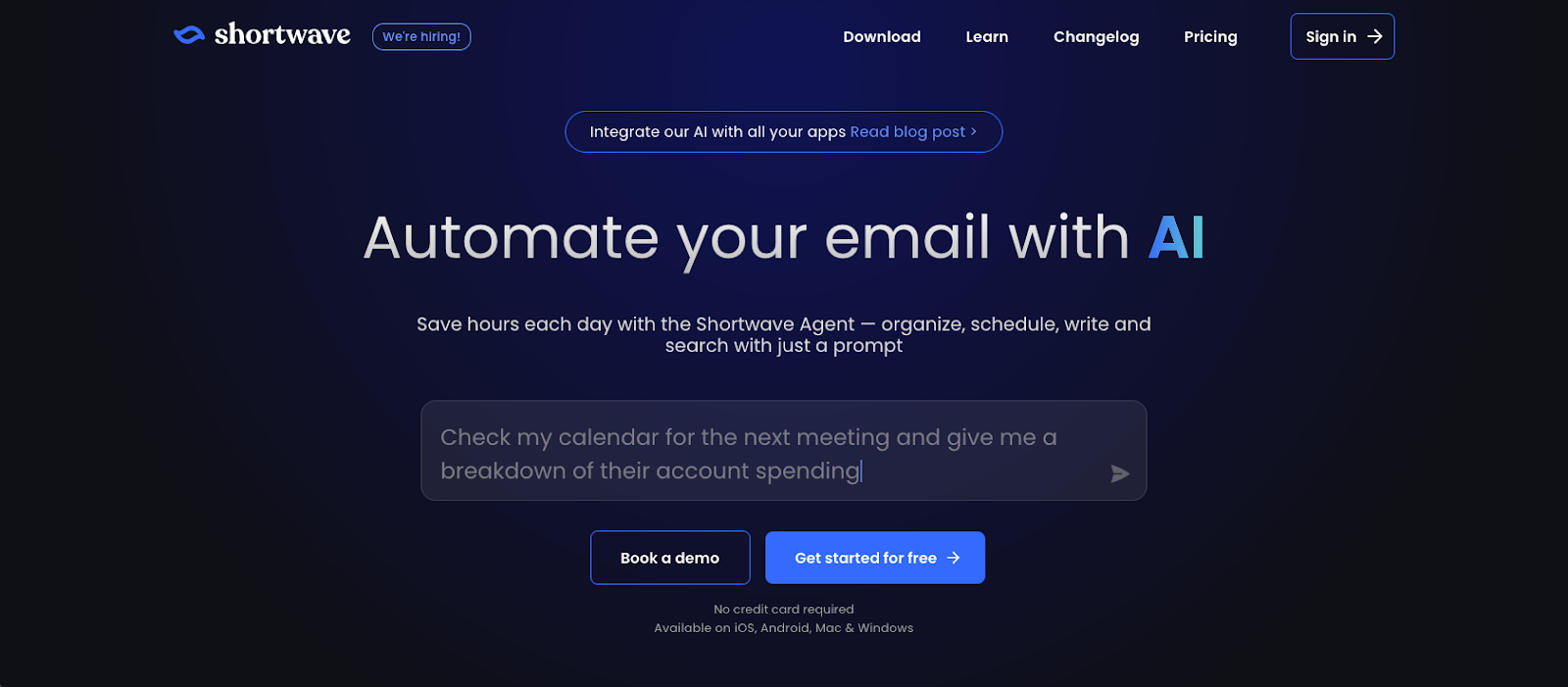
Best for: Summarizing long threads, drafting replies in your voice, fast triage, and quick scheduling from your inbox.
Why we picked it: Shortwave turns the inbox into somewhere you actually finish things. You land on a thread and get the gist in a glance, its writing tools draft in your voice (pulling the right links from your own history), and you can check availability, create events, and search across team mail without leaving the thread. Lightweight rules keep noise down. Even so, it’s Gmail-first (Outlook support is limited) and some power features sit on paid plans.
Key features
- Instant AI summaries at the top of threads for quick catch-up.
- AI writing + autocomplete that learns your tone, finishes drafts, and suggests real links/phrases from your history.
- AI search & analysis across your inbox (and your team’s emails & attachments) to answer questions fast.
- AI filters (natural-language rules) to auto-label, star, archive, and run workflows.
- Check availability, create calendar events, and draft scheduling emails.
- Splits, Bundles, Delivery schedules, and Todos for faster triage.
- Shared threads, team comments, assignees, shared labels, and AI snippets/automations.
- Read statuses and link tracking for follow-up timing.
- Web, iOS/Android/Mac/Windows, with voice commands supported in the AI assistant.
Limitations to note
- Gmail-native; others via Gmail bridge (no direct Exchange/iCloud).
- AI features & limits vary by plan (threads per AI search, filters, context, history).
- POP-bridged mail can lag; Apple MPP weakens read-status tracking.
- Gmail’s 25 MB attachment cap and free-tier footer apply.
Shortwave pricing: Free → paid plans start at $18/month.
11. Granola – best for bot-free meeting notes
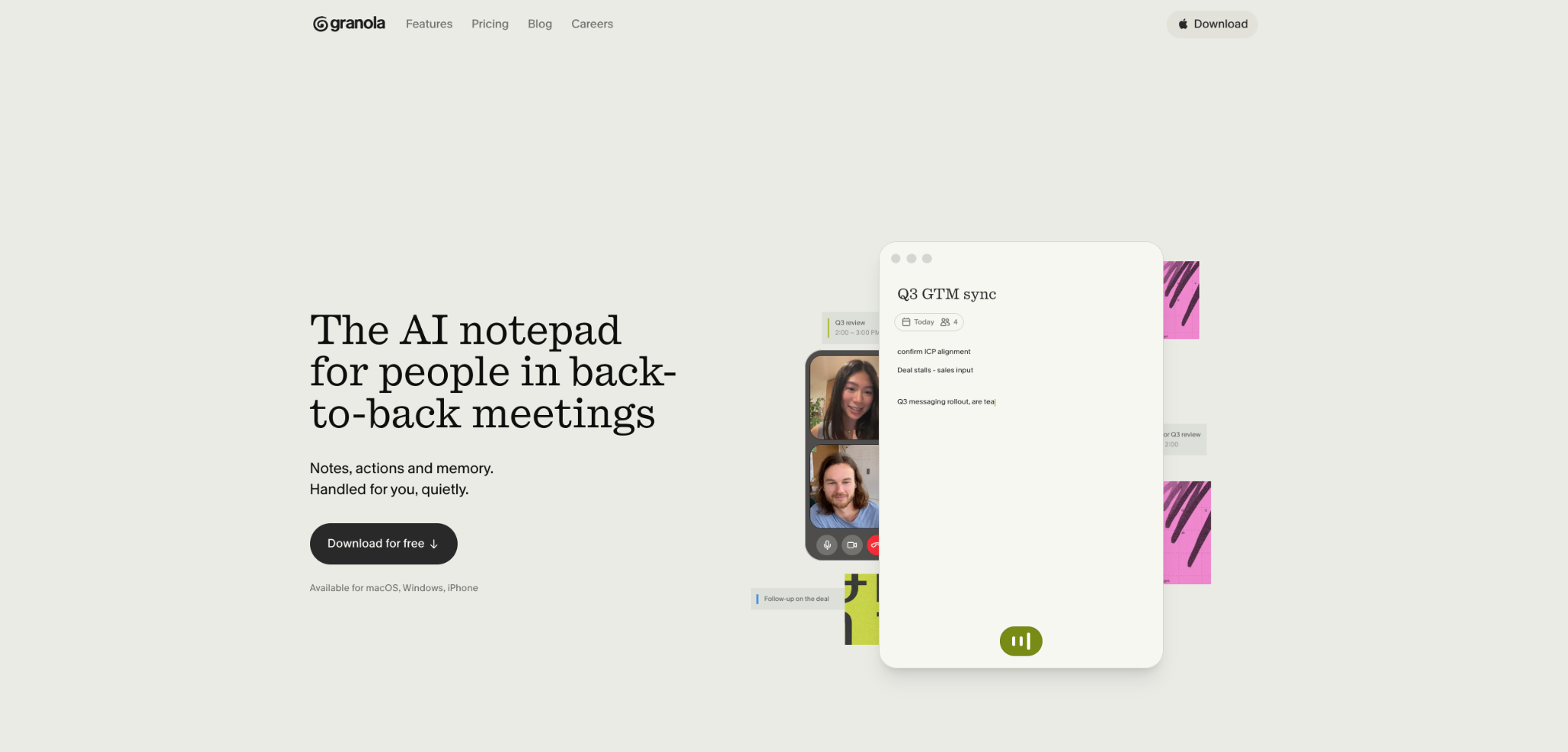
Best for: Back-to-back meeting days where you want clean, shareable notes without a recording bot in the call.
Why we picked it: Granola took off because it solves meeting notes differently. There’s no bot that joins your call. It captures audio locally on your laptop, listens alongside your own typed shorthand, and turns both into a structured, shareable recap with action items moments after you hang up. Because nothing announces itself in the participant list, it’s a favorite for sensitive client, sales, and exec conversations. It’s meeting-specific by design, so pair it with a generalist or a calendar tool for everything else.
Key features
- Bot-free capture: records system audio locally, with no notetaker in the participant list.
- Enhances your own rough notes into structured summaries and action items.
- Custom templates and “recipes” for follow-ups, recaps, and post-call actions.
- Integrations with CRMs and tools (Notion, HubSpot, Slack, Zapier) on paid plans.
- Searchable history and ask-your-meetings Q&A.
Limitations to note
- Desktop-first (Mac and Windows) with a companion iOS app; no in-call live captions.
- The free Basic plan caps stored history (about 25 notes).
- Transcription accuracy still depends on audio quality.
- Bot-free capture means you, not a bot, must actually be in the meeting.
Granola pricing: Free → paid plans start at $14/month.
12. Bardeen – best for browser-native automations
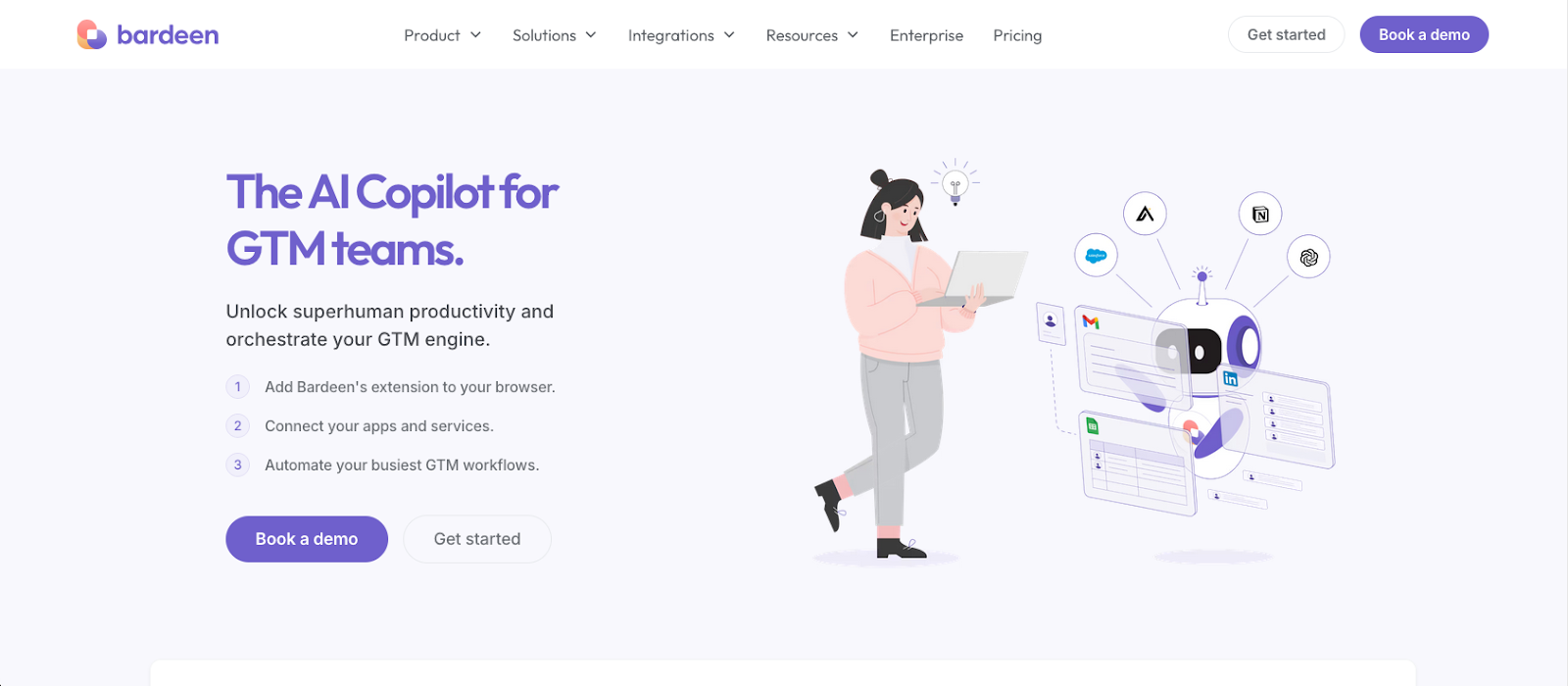
Best for: Scraping data, moving info between web apps, and automating repetitive GTM workflows without code.
Why we picked it: If your day is tab-heavy, Bardeen turns click-copy-paste into repeatable automations. You build and run them right on the page, get instant feedback, and go from idea to working playbook in minutes. Once it’s dialed, you share it so everyone runs the same steps the same way. For GTM, research, and ops teams that live in the browser, that “build where you work” flow saves more time than server-first tools.
Key features
- Describe a workflow in plain language, and Bardeen generates a multi-step automation you can edit.
- Run Playbooks on demand, or create Autobooks that fire on triggers (e.g., schedule, “when email arrives,” “when website data changes”).
- Extract lists/rows and page details, then push to Sheets/CRMs; supports templates and list scraping.
- Chrome/Edge extension with in-page actions; marketed as an AI automation copilot for common GTM tasks.
- Connects to 100+ apps across Sheets, Slack, Notion, HubSpot, Salesforce, LinkedIn, Gmail, Drive, Jira, Asana, etc.
- Runs locally in your browser by default; optional cloud runs for always-on automations; SOC 2 Type 2 and GDPR posture documented.
- Agent-style capabilities and GTM-focused automation offerings (e.g., summaries, pipeline monitoring) on higher tiers.
Limitations to note
- Gmail/Chromium-native tool; cloud runs exist but are limited.
- Usage-based: 1 credit/action; hitting caps pauses runs; test builds spend 0 credits.
- Scraping caveats: dynamic pages, iframes, paywalls, and anti-bot rules can block/limit results.
- Keep the machine awake / tab loading for long scrapes; avoid minimized windows.
- Data: runs locally by default; cloud optional with separate considerations.
Bardeen pricing: Free → paid plans start at $10/month.
13. Zapier + AI – best no-code cross-app workflows
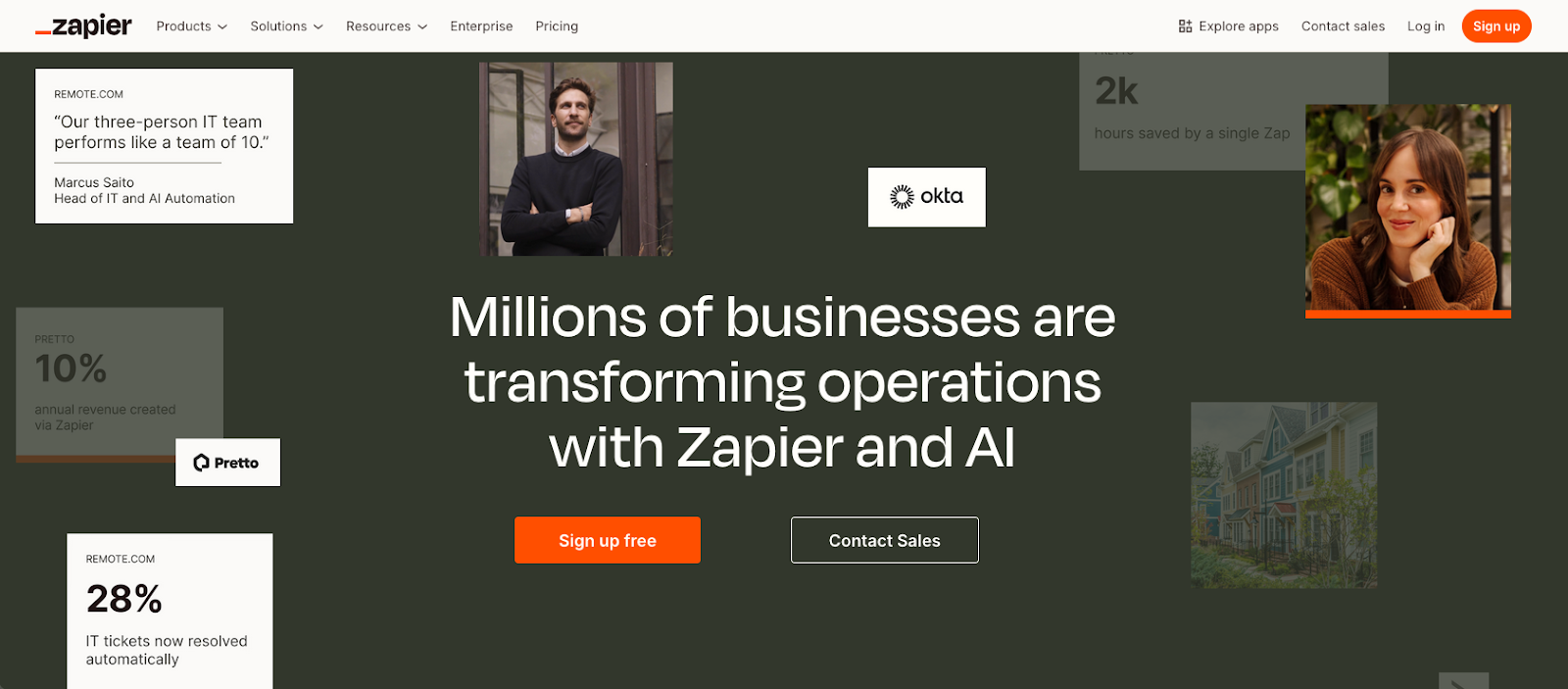
Best for: Turning prompts into multi-step automations (ideal for repetitive tasks) that move data across your stack without code.
Why we picked it: When your work spans lots of apps, Zapier + AI turns plain-English requests into reliable, cross-app workflows. You say what you want, it scaffolds the steps, and the AI handles the messy bits (summarizing, extracting, classifying) so you’re not reinventing prompts. With approvals, activity logs, and permissions, the automations are shareable (not just personal hacks), and thousands of integrations mean it fits your stack today.
Key features
- AI by Zapier step with a prompt builder, output previews, prompt strength score, and model choice.
- Ground answers in Box, Confluence, Dropbox, Google Docs/Drive, SharePoint, Notion, and file uploads.
- Describe what you want and let Microsoft Copilot auto-build Zaps or suggest/edit steps as you go. (Open beta.)
- Agents to run autonomous, templated workflows, with Pods to group agents and an Activity view to audit runs.
- Human-in-the-Loop approvals to pause a run for review/inputs before continuing.
- Canvas to diagram processes and get AI step suggestions that turn flowcharts into automations (ties into Zaps/Interfaces/Tables/Chatbots).
- Chatbots that can use knowledge sources and act via Zaps to reply across channels.
- 9,000+ app integrations so AI steps/agents can read and act across your stack.
Limitations to note
- Plan-gated features & polling; premium apps and cadence vary by tier.
- Caps apply: 100-step Zaps; burst/rate limits (incl. instant 20k/5m); app throttles; flood protection.
- AI betas & oversight: Chatbots/AI by Zapier change fast; add Human in the Loop for approvals.
- Data & files: configurable retention (backups ~4 mo); Interfaces ~25 MB/file (paid), up to 100 files.
- One-way by design; build two Zaps for “sync.”
Zapier + AI pricing: Free → paid plans start at $29.99/month.
14. Sintra – best AI helpers for small teams
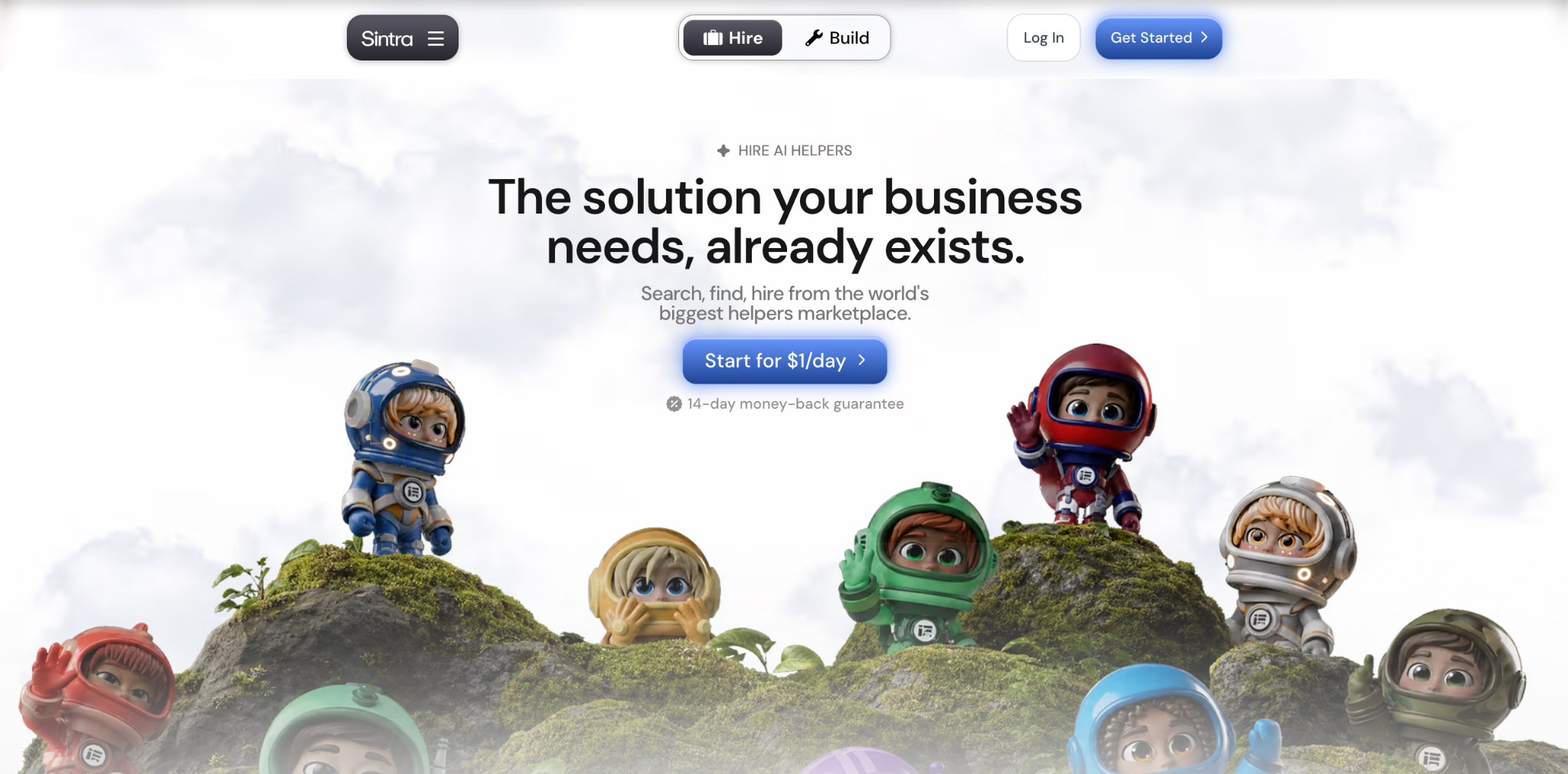
Best for: Small businesses and lean marketing, sales, and ops teams that want role-based “AI helpers” without building their own agents.
Why we picked it: Sintra packages AI into a set of ready-made “helpers,” each modeled on a role like social media, copywriting, support, SEO, or data, so a small team gets the output of several specialists from one subscription. You brief a helper in plain language and it produces the work, and its Brain AI keeps your brand context so outputs stay on-voice. For very small businesses that can’t hire a full marketing or ops bench, it’s a practical way to get more done. It’s a content-and-tasks platform more than a deep workflow engine, and the monthly credit ceiling is the main thing to watch.
Key features
- A dozen role-based AI helpers (marketing, sales, support, ops, and more) in one workspace.
- Brain AI stores brand and business context so outputs stay consistent.
- Plain-language briefs; helpers draft posts, emails, copy, and analyses.
- Integrations with Slack, Gmail, HubSpot, Shopify, Zapier, and others.
- A single subscription covers the full team of helpers (no per-seat fees).
Limitations to note
- Credit-based: each plan includes a monthly credit allowance that heavy users can exhaust.
- No free tier; a 14-day money-back guarantee stands in for a trial.
- Better at content and routine tasks than deep, custom multi-app workflows.
- Limited plan tiers, so light users still pay for the full suite.
Sintra pricing: Paid plans start at $48.50/month
15. Siri (Apple Intelligence) – best built-in assistant for Apple devices
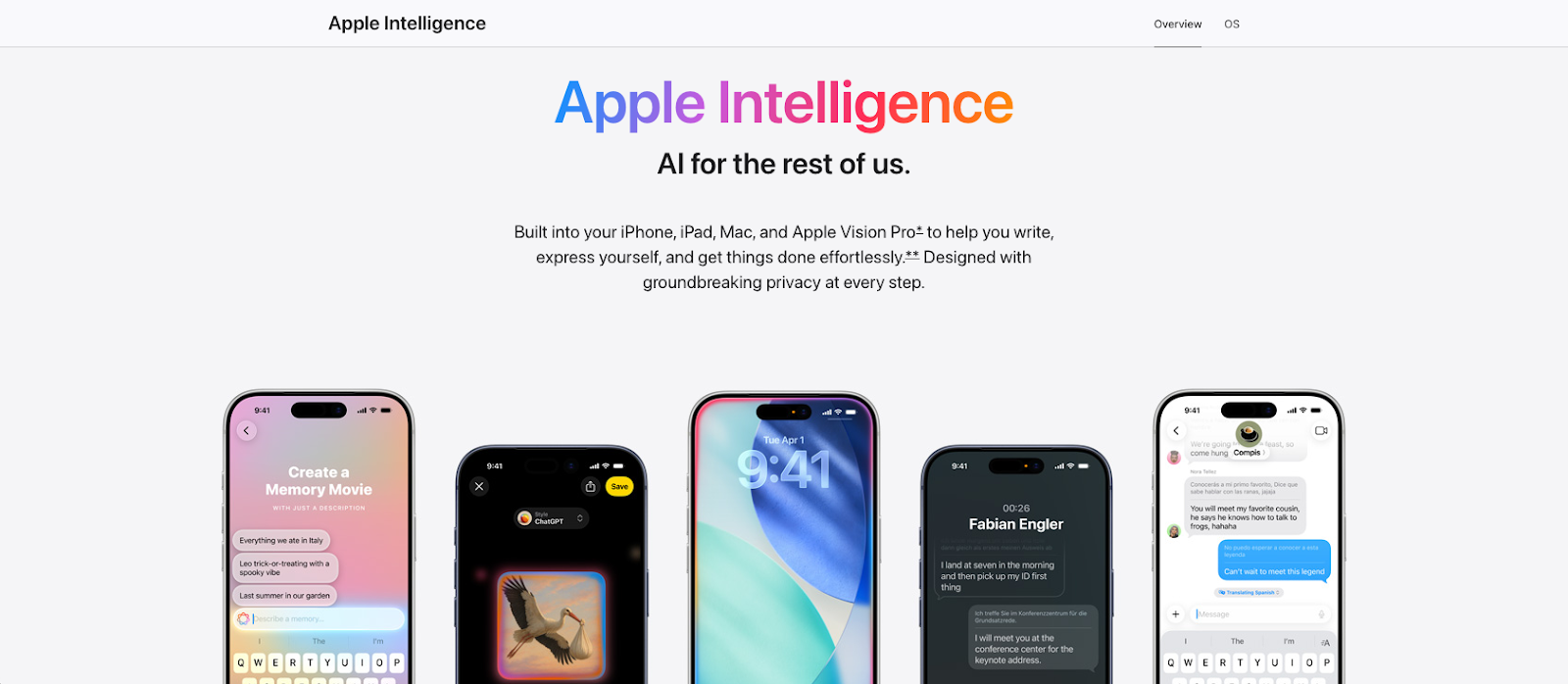
Best for: Hands-free tasks, system actions, writing tools, and privacy-minded help across iPhone, iPad, and Mac.
Why we picked it: On Apple devices, the best assistant is the one that’s already there and understands what’s on your screen. Siri with Apple Intelligence turns what’s on screen into quick actions, brings writing help right where you’re working, and handles simple follow-ups without bouncing between apps. Privacy-friendly defaults are built in, and you can opt into extra help when you want it.
Key features
- Siri AI (unveiled at WWDC 2026): an all-new, more conversational Siri rebuilt on Apple Foundation Models co-developed with Google’s Gemini, with a dedicated Siri app, on-screen awareness, system-wide Writing Tools, Image Playground/Genmoji, and Live Translation.
- Optional ChatGPT hand-off to help describe images or draft text.
- Visual intelligence that uses camera/screen context (e.g., Live Text) to act on what’s in view.
- Privacy by design: on-device processing when possible; complex requests go to Private Cloud Compute on Apple silicon with ephemeral processing.
Limitations to note
- Apple Intelligence requires recent hardware (iPhone 15 Pro and the iPhone 16 line and newer; M-series iPads/Macs).
- Availability varies by region and language (initially limited in the EU and unavailable in China).
- The new Siri AI is rolling out as a beta in 2026, with general availability expected this fall in iOS 27, iPadOS 27, and macOS 27.
Siri pricing: Free (included with eligible Apple devices)
16. Notion AI – best workspace assistant for small businesses
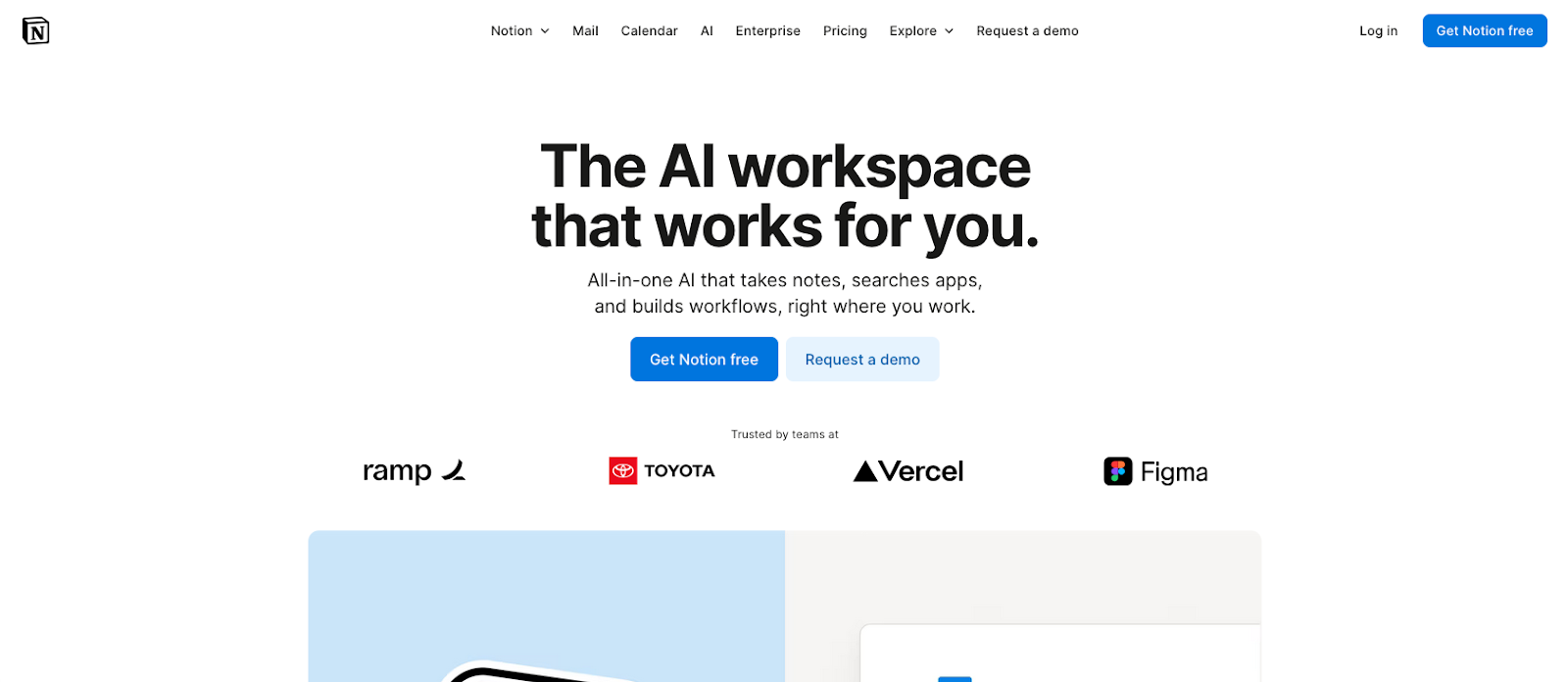
Best for: Notes, docs, wikis, and knowledge bases with an assistant built in.
Why we picked it: Notion AI meets you where your team already works (notes, docs, wikis, databases), so you’re not bouncing to a separate bot. It turns rough notes into clean drafts in place, answers from the exact pages your team trusts, and writes directly into databases (which double as project management tools) so updates don’t die in a doc. The result: fewer context switches, faster handoffs, and one source of truth that stays current as people edit. If you want AI that upgrades the docs you already rely on, Notion AI is an easy pick.
Key features
- Q&A across your workspace for instant answers from pages and databases you can access.
- Writer & editing tools with file/image analysis.
- AI Autofill for databases to summarize, extract, translate, or use custom prompts – optionally auto-update on edits.
- Enterprise Search across Notion and other tools (Microsoft Teams/SharePoint/OneDrive, Gmail, Linear, Slack, Google Drive, GitHub, Jira) with summarized answers.
- AI Meeting Notes that capture/transcribe meetings and, with Notion Calendar, can auto-attach to every event.
- Research Mode to draft detailed docs by analyzing your workspace, connected tools, and the web.
- AI connectors to pull context from Slack, Google Drive, Jira, GitHub, Microsoft 365, and more, right inside Notion.
- PDF searchability: uploaded PDFs become automatically searchable for faster answers.
- AI Home & model chat: a centralized place to ask, research, or build workflows; chat with top models in-app.
Limitations to note
- Business/Enterprise include AI; Free/Plus = limited trial; legacy add-on users retain access while subscribed.
- Connectors/Enterprise Search & Research Mode need higher tiers; some features are Beta and admin-controlled.
- Data & privacy: no training on your Customer Data by default; 0-retention (Enterprise) vs ~30-day (others); embeddings purge on deletion.
- Limits: 5 MB (Free) vs ~5 GB/file (paid); complimentary responses & possible slowdowns with heavy use.
- Permissions honored; admins can gate integrations; always check cited sources for critical work.
Notion AI pricing: Free → paid plans start at $12/month.
17. Otter AI – best meeting note assistant
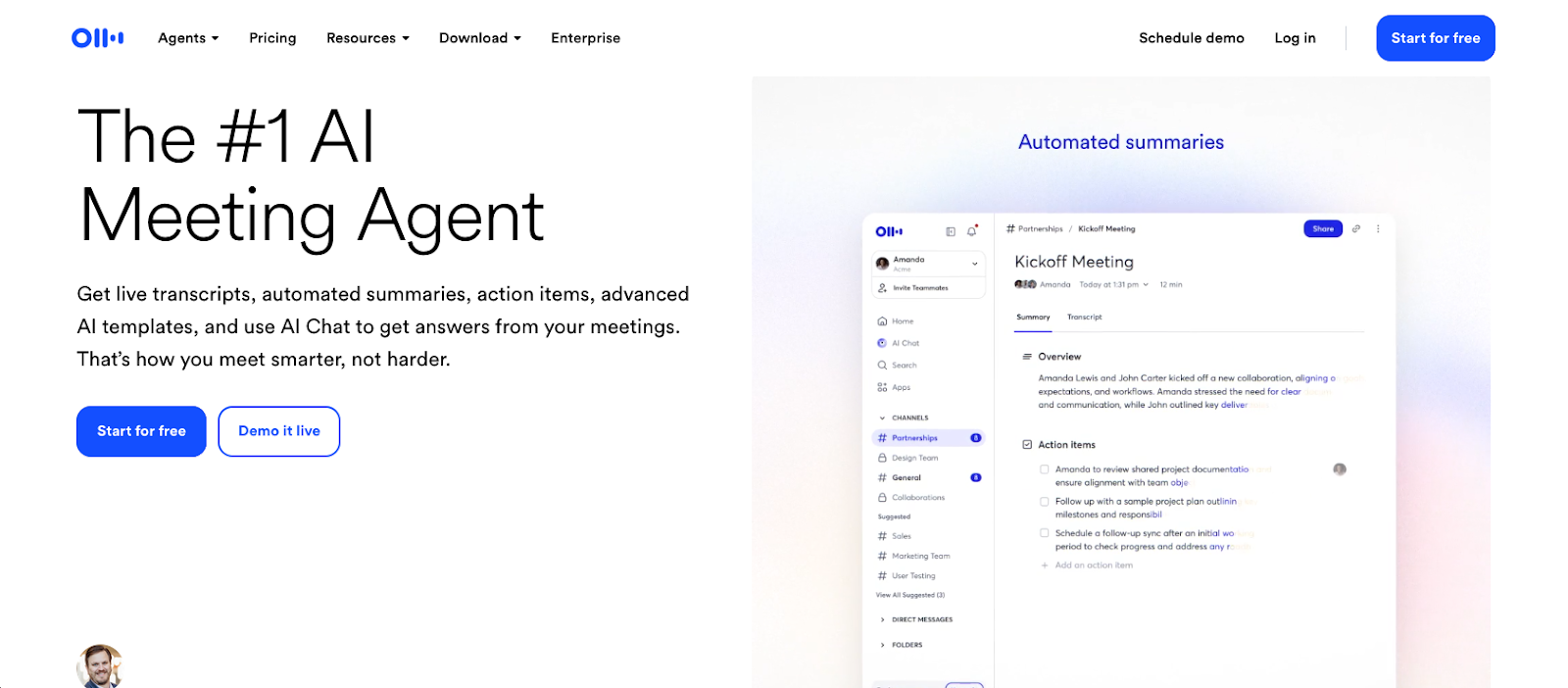
Best for: Auto-capturing meetings, generating summaries and action items, and streamlined note taking.
Why we picked it: Otter turns meetings into something you can actually use afterward without needing to babysit a recorder. You get live notes, a clean recap with action items, and key slides pulled in automatically, so people can act (or catch up) fast. Searchable transcripts and Q&A make follow-ups easy, and the integrations with Zoom/Meet/Teams and mobile mean those notes don’t disappear into a folder. Of course, the accuracy still depends on audio quality, and some advanced controls live on higher tiers.
Key features
- Auto-joins Zoom, Google Meet, and Microsoft Teams from your calendar to capture live notes and transcripts.
- Generates automatic summaries, action items, and outlines on each conversation.
- Lets you ask questions during or after meetings with Otter AI Chat (including in-meeting posts) and voice commands.
- Automatically captures unique slides/screen shares alongside the notes.
- Voice-activated Meeting Agent can speak up in Zoom to answer questions and draft follow-ups (other platforms rolling out).
- Identifies speakers with tagging and Zoom name matching.
- iOS and Android apps for recording, notifications, and synced history.
- SAML SSO (Enterprise), HIPAA with BAA (Enterprise), domain-restricted sharing, data-retention controls, and pre-meeting recording notices
Limitations to note
- Minutes/AI capped by plan.
- Accuracy varies with noise/accents/jargon; review important sections.
- Safari can’t capture others’ audio, and Teams shows Notetaker as an unverified guest.
- Waiting rooms and recording permissions can block joins, and admins can enforce pre-meeting notices and retention.
- Per-meeting recording caps vary by plan (90 min on Pro; up to 4 hrs on Business).
Otter AI pricing: Free → paid plans start at $16.99/month.
18. Gamma – best for AI presentations & on-brand content
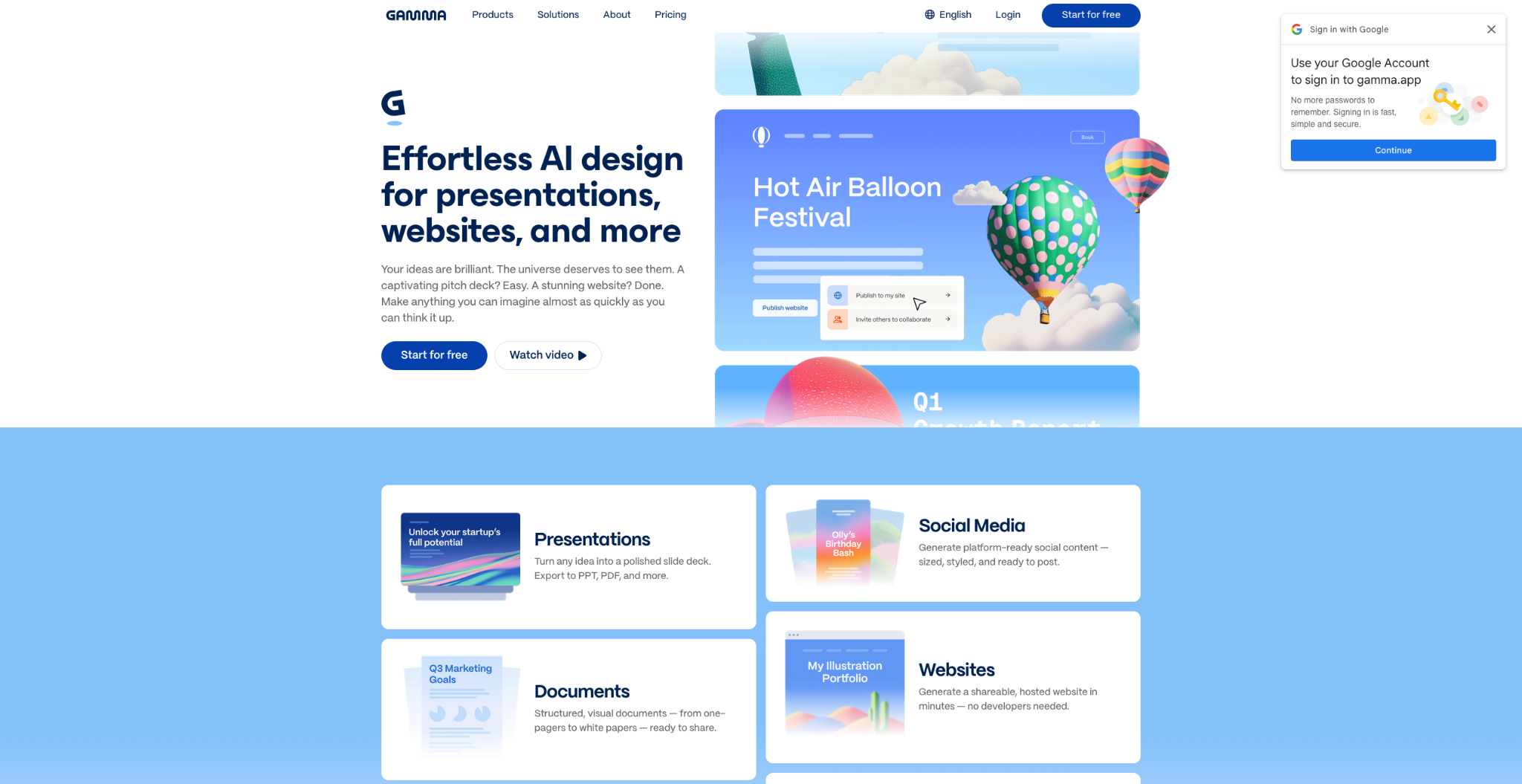
Best for: Marketing and creative teams that need polished decks, one-pagers, and microsites fast, without a designer for every asset.
Why we picked it: Gamma turns a prompt or a rough outline into a finished, on-brand presentation, document, or website in minutes. You describe what you need; it generates the structure, copy, layout, and images, then lets you refine with simple commands or its AI editor. For small marketing and creative teams, it removes the “blank canvas with no designer” bottleneck and keeps everything consistent with your brand kit. It’s content-creation-first, so pair it with a generalist for research and a calendar tool for the rest of your day.
Key features
- Generate full decks, documents, and websites from a short prompt or outline.
- AI editing to restructure, rewrite, restyle, and translate with simple instructions.
- Brand controls (fonts, colors, logos) keep outputs on-brand across the team.
- Built-in images, charts, embeds, and analytics on the content you share.
- One-click export to PDF and PowerPoint, plus publish-to-web with custom domains.
Limitations to note
- Credit-based AI generation; the free tier is capped and adds Gamma branding.
- Built for visual content, not a general chat assistant or workflow engine.
- Generated designs still need a human polish for brand-critical work.
- Custom domains and advanced controls require higher tiers.
Gamma pricing: Free → paid plans start at $10/month.
19. Slack AI – best assistant inside team chat
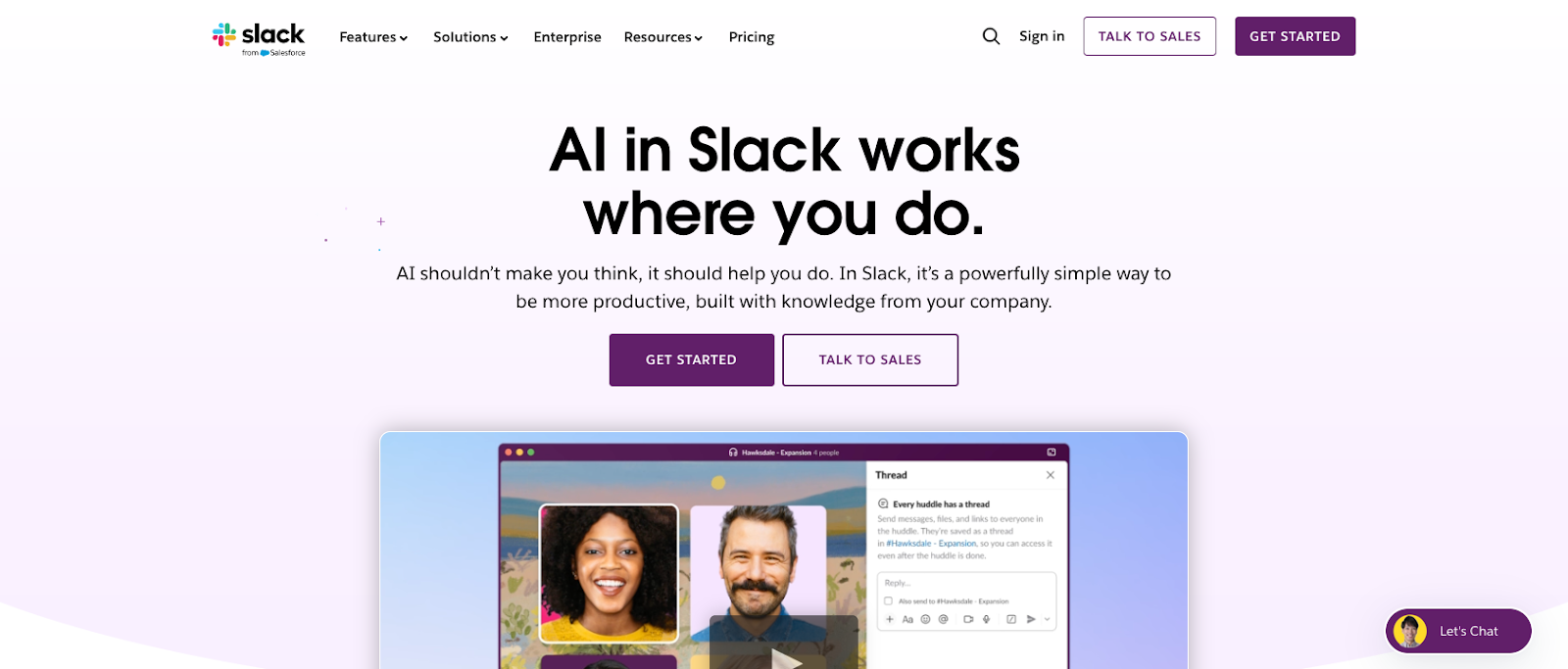
Best for: Instant recaps of channels/threads, huddle notes, translations, and quick answers without leaving Slack.
Why we picked it: Slack AI meets you in the place you already work. It turns noisy channels and huddles into quick, trustworthy catch-ups and lets you take the next step right in the thread, so you don’t lose momentum. Because answers are grounded in conversations and files you already have access to, they’re easier to reuse with confidence. Extras like translation and canvas writing ease cross-team handoffs without adding another tool. For Slack-first orgs, it’s the lowest-effort way to give everyone an everyday assistant.
Key features
- Channel/thread recaps & AI huddle notes for fast catch-up and meeting takeaways (rolling out on paid plans).
- AI Search answers questions in natural language using content you already have access to in Slack.
- Message translation so teammates can translate messages into their preferred language.
- Summarize conversations, extract action items, and draft or rewrite content inside canvases.
- Hover to get AI explanations of acronyms/internal terms; AI profile summaries help onboard to new teams.
Limitations to note
- Depth varies by plan/admin policy.
- Search stays inside Slack & connected sources (no public web), and answers are permission-scoped and cited.
- Data/retention: no training on your data, ephemeral outputs, Recaps ~90 days, and workflow posts follow your retention.
- Limits: image ≈ 4 MB, PDF ≈ 10 MB for “Explain”, file summaries cover common doc types, and large ranges take longer.
- Some third-party AI/search tools can’t index Slack long-term under new Salesforce rules.
Slack AI pricing: Free → paid plans start at $8.75/month.
20. Octoparse – best for email extractor
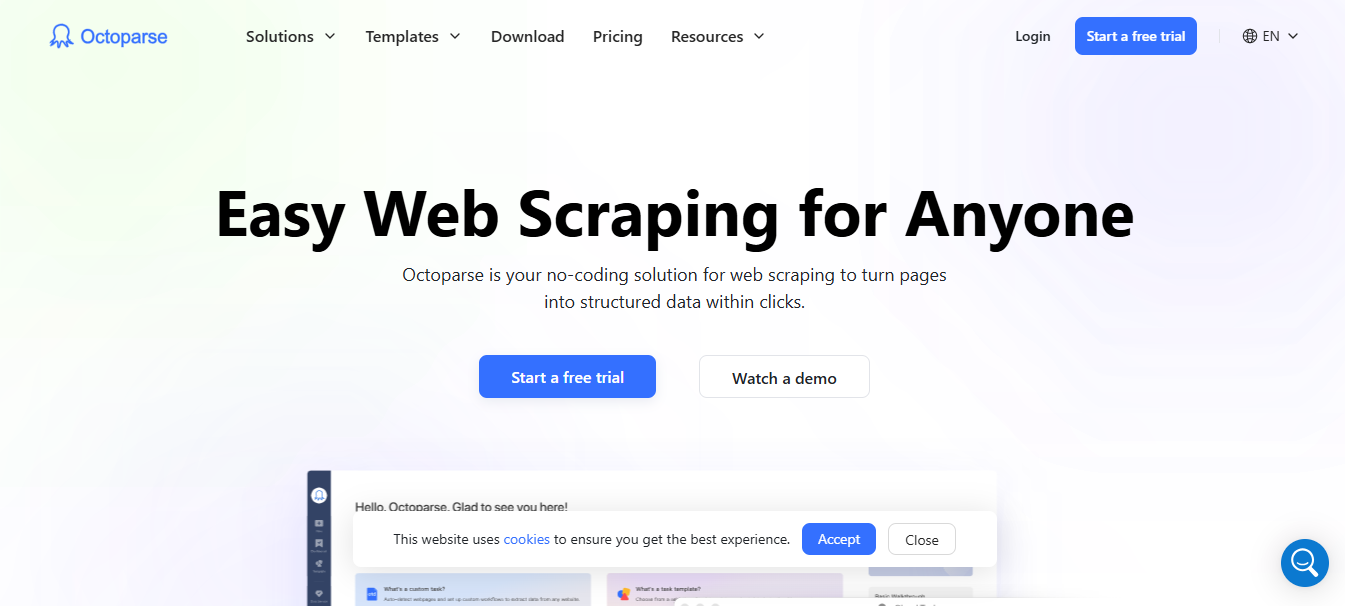
Best for: Using AI to extract actionable email data.
Why we picked it: Octoparse transforms the challenge of extracting email data into a streamlined operation. As a powerful web scraping tool, it automates the collection of emails from various online sources, making it a go-to solution for marketers and data analysts. The software's robust AI capabilities ensure accurate and efficient data retrieval, enabling users to focus on leveraging the information for business insights and growth. Octoparse's intuitive interface and flexible features allow easy navigation and customization, making complex data extraction tasks manageable and time-efficient.
Key features
- Streamlines the process of collecting data from web pages with pre-built scraping templates
- Simplifies the setup of custom scraping tasks without the need for coding.
- Automates data collection at predetermined intervals.
- Allows users to export gathered data in various formats such as Google Sheet, Excel, JSON, CSV, HTML, XML, and all kinds of databases
- 24/7 extracting data in the cloud. Up to 40 or more concurrent cloud processes to scale your task.
- IP rotation, proxies, CAPTCHAs solving, etc.
- includes techniques such as infinite scrolling, pagination, hover, AJAX, etc.
Limitations to note
- New users may require time to familiarize themselves with advanced features.
- Changes in the source websites can disrupt data scraping setups.
- Some features are restricted to premium accounts
Octoparse pricing: Free → paid plans start at $83/month
Simplify your life with AI assistants 🤖
As AI continues to evolve, expect even more innovative and personalized AI virtual assistants to emerge. The possibilities are endless, and these intelligent helpers will undoubtedly become an integral part of our routine tasks, helping us with various tasks. Whether you're seeking a helpful companion for daily tasks or a powerful digital assistant to boost productivity, there are many AI tools out there to transform your life.
Any amazing AI assistants we missed? What are some of your favorites? Tweet us @reclaimai to let us know!